






VOL. 18, ISSUE NO. 8 | November 2025

Spotlight





MANUFACTURING AND INDUSTRIAL HUB OF INDIA
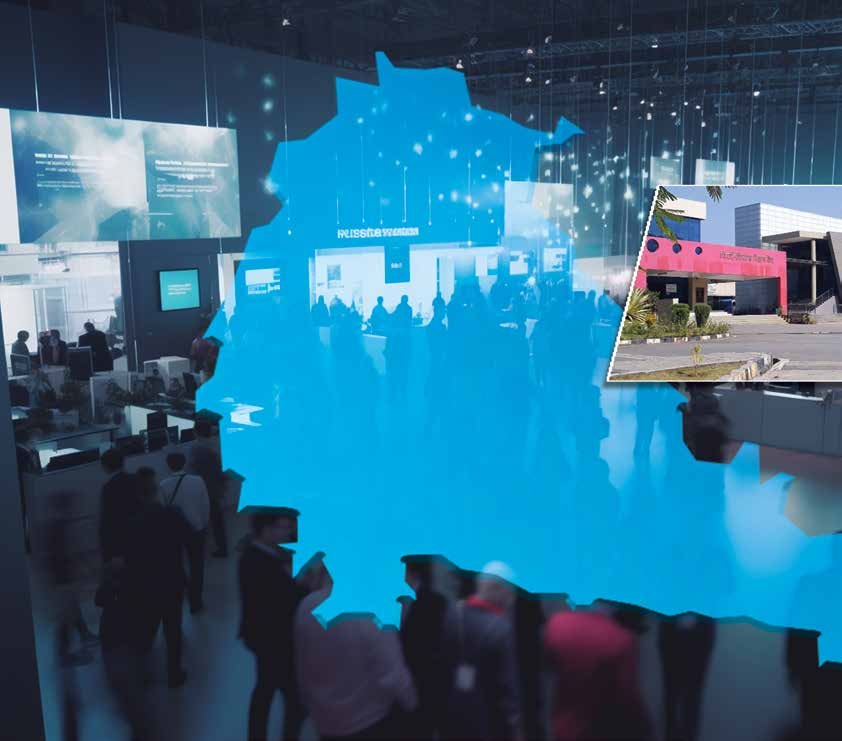
Maharashtra is situated on the west coast of India. The state shares borders with Gujarat, Madhya Pradesh, Chhattisgarh, Andhra Pradesh, Karnataka, Goa and the Union Territory of Dadra and Nagar Haveli. The state government has taken numerous initiatives to upgrade the education system such as slashing school fees by 15% for the year 2021-22, planning on recruiting 3,064 professors in the state and allotting 1% education and job quota to COVID orphans.
Economy in Maharashtra
At current prices, Maharashtra’s gross state domestic product was estimated at Rs. 49.39 trillion (US$ 578.31 billion) in FY26. GSDP of the state increased at a CAGR (in US$) of 10.78% from FY16 to FY26.
Mumbai, the state’s capital, is the commercial capital of India and has evolved into a global financial hub. The city is home to several global banking and financial services providers. Pune, another major city in the state, has emerged as the educational hub. According to the Department for Promotion of Industry and Internal Trade (DPIIT), between October 2019-December 2024, the FDI inflow in Maharashtra stood at Rs. 6,71,863 crore (US$ 85.73 billion) Maharashtra ranked first for the highest FDI reception. Maharashtra ranked first for the highest FDI reception. Total exports from the state stood at Rs. 5,06,823 crore (US$ 59.34 billion) in FY25 (April- Feb). Maharashtra exported key items such as Engineering goods, pearls, precious and semi-precious stones, gold and other precious metal jewellery, drug formulations, and electronic goods.
Industries in Maharashtra
Maharashtra has emerged as a key hub for IT &ITeS, electronics, and captive business outsourcing industries. The state has a well-developed social, physical, and industrial infrastructure. Apart from 16 airports, the state has two major and 48 minor ports. It also has a well-developed power supply grid. Maharashtra’s infrastructure sector has grown significantly over the last decade, with a substantial rise in the number of industrial clusters and public-private partnership (PPP) projects. Pune is the largest auto hub of India with over 4,000 manufacturing units in the Pimpri-Chinchwad region alone. Pune is home to large players like Bajaj Auto Limited, Daimler Chrysler Limited, Tata Motors, whereas Nasik is home to one of India’s largest multi-utility vehicle manufacturers - Mahindra & Mahindra Limited.

Vetal Hill Panorama, a prominent hill in Pune. Elevation c. 800 m.
Pune
Oxford of East / Most Liveable City
Pune, seventh most populous city in India ,second largest in the state of Maharashtra. has evolved greatly since Indian Independence, from being ‘Oxford Of The East’, to being one of the most important automobile manufacturing hubs and home to world’s largest vaccine manufacture, Serum Institute of India.
Geography
Pune is situated at approximately 18° 32” north latitude and 73° 51” east longitude. The city’s total area is 15.642 km2, and the municipal corporation area covers 518 km2. By road Pune is 149 km (93 mi) southeast of Mumbai, 580 km (360 mi) south-west of Indore, 695 km (432 mi) west of Nagpur, 1,173 km (729 mi) south of Delhi, 734 km (456 mi) north of Bangalore, 562 km (349 mi) north-west of Hyderabad. Pune lies on the western margin of the Deccan plateau, at an altitude of 560 m (1,840 ft) above sea level. It is on the leeward side of the Sahyadri mountain range, which forms a barrier from the Arabian Sea. It is a hilly city, with Vetal Hill rising to 800 m (2,600 ft) above sea level. The Sinhagad fort is at an altitude of 1,300 metres (4,300 feet).
The old city of Pune is at the confluence of the Mula and Mutha rivers The Pavana, a tributary of Mula river and Indrayani river, a tributary of the Bhima river, traverse the northwest Neighbourhoods of Pune.
Pune (Marathi: Puṇē, pronounced [ˈpuɳe] POO-nay), previously spelled in English as Poona (the official name until 1978), is a city in the state of Maharashtra in the Deccan plateau in Western India. It is the administrative headquarters of the Pune district, and of Pune division. According to the 2011 Census of India, Pune has 7.2 million residents in the metropolitan region, making it the seventh-most populous metropolitan area in India.Pune accounts for more than 5% of the entire area of the state.
The city of Pune is part of Pune Metropolitan Region. Pune is one of the largest IT hubs in India. It is also one of the most important automobile and manufacturing hubs of India. Pune is often referred to as the “Oxford of the East” because of its educational institutions. It has been ranked “the most liveable city in India” several times.
History
Pune at different points in time has been ruled by the Rashtrakuta dynasty, Ahmadnagar Sultanate, the Mughals, and the Adil Shahi dynasty. In the 18th century, the city was part of the Maratha Empire, and the seat of the Peshwas, the prime ministers of the Maratha Empire. Pune was seized by the British East India Company in the Third Anglo-Maratha War; it gained municipal status in 1858, the year in which Crown rule began. Many historical landmarks like Shaniwarwada, Shinde Chhatri, and Vishrambaug Wada date to this era. Historical sites from different eras dot the city.
Pune has historically been a major cultural centre, with important figures like Dnyaneshwar, Shivaji, Tukaram, Baji RaoI, Balaji Baji Rao, Madhavrao I, Nana Fadnavis, Mahadev Govind Ranade, Gopal Krishna Gokhale, Mahatma Jyotirao Phule, Savitribai Phule, Gopal Ganesh Agarkar, Tarabai Shinde, Dhondo Keshav Karve, and Pandita Ramabai doing their life’s work in Pune City or in an area that falls in Pune Metropolitan Region. Pune was a major centre of resistance to British Raj, with people like Gopal Krishna Gokhale, Bal Gangadhar Tilak playing leading roles in struggle for Indian independence in their times.
The earliest reference to Pune is an inscription on a Rashtrakuta Dynasty copper plate dated 937 CE, which refers to the town as Punya-vishaya. By the 13th century, it had come to be known as Punawadi.
During the Rashtrakuta dynasty, the city was referred to as Punnaka and Punyapur. The copper plates of 758 and 768 CE show that the Yadava dynasty had renamed the city as Punakavishaya and Punya Vishaya. ‘Vishaya’ means land, while ‘Punaka’ and ‘Punya’ mean holy. The city was known as Kasbe Pune when under the command of Maratha king Shivaji’s father, Shahaji. Mughal emperor Aurangzeb renamed a small neighbourhood in central part of the old city as Muhiyabad (the only divergent naming) some time between 1703 and 1705 in memory of his great-grandson Muhi-ul- Milan, who died there. The name Muhiyabad was reverted soon after Aurangzeb’s death. Anglicized to Poona in 1857 by the English during British rule, the city’s name was changed to Pune in 1978.
Sinhagad fort is known for Battle of Sinhagad on 4 February 1670
History in Depth
Early and Medieval Period
The circular Nandi mandapa at the Pataleshwar cave temple built in the Rashtrakuta era (753–982)
Copper plates dated 858 and 868 CE show that by the 9th century an agricultural settlement known as Punnaka existed at the location of the modern Pune. The plates indicate that this region was ruled by the Rashtrakuta dynasty. The Pataleshwar rock-cut temple complex was built during this era. Pune was part of the territory ruled by the Seuna Yadavas of Devagiri from the 9th century to 1327. Pune was under control of various Muslim sultanates until the late 1600s.
The Maratha Empire
Pune was part of the Jagir (fiefdom) granted by the Nizamshahi (Ahmadnagar Sultanate) to Maloji Bhosale in 1599. Maloji Bhosale passed on Jagir of Pune to his son Shahaji Bhosale. The town was destroyed by Murar Jagdeo, a general from the rival Adil Shahi dynasty in 1636. Shahaji himself soon joined Adilshahi and regained the Pune jagir. At that time he selected the town for the residence of his wife Jijabai, and young son Shivaji, the future founder of the Maratha empire. Shahaji appointed Dadoji Konddeo to help Jijabai in the administration of Jagir and in the reconstruction of the town. The Lal Mahal residence of Jiajabai and Shivaji was completed in 1640 AD. Shivaji spent his young years at the Lal Mahal. Jijabai is said to have commissioned the building of the Kasba Ganapati temple. The Ganesha idol consecrated at this temple has been regarded as the presiding deity (Gramadevata) of the city.
Pune changed hands between the Mughals and the Marathas many times during the rest of the 1600s. Recognizing the military potential of Pune, the Mughal general Shaista Khan and later, the emperor Aurangzeb further developed the areas around the town. Pune was occupied again by Marathas in June 1670, four months to the battle of Sinhagad and remained in the hands of Marathas. From 1703 to 1705, towards the end of the 27-year-long Mughal–Maratha Wars, the town was occupied by Mughal emperor Aurangzeb and its name was changed temporarily to Muhiyabad. This name was abandoned and reverted to its original name soon after Aurangzeb’s death.
Peshwa Rule
In 1720, Baji Rao I was appointed Peshwa (prime minister) of the Maratha Empire by Shahu I, the fifth Chhatrapati of the Maratha Empire. As the Peshwa, Bajirao moved his base from Saswad to Pune in 1728, marking the beginning of the transformation of what was a kasbah into a city. He also commissioned the construction of the Shaniwar Wada on the high grounds of right bank of the Mutha River. The construction was completed in 1730, ushering in the era of Peshwa control of the city. Bajirao’s son and successor, Nanasaheb constructed a lake at Katraj on the outskirts of the city and an underground aqueduct to bring water from the lake to Shaniwar Wada and the city. The aqueduct was still in working order in 2004.
The patronage of the Maratha Peshwas resulted in a great expansion of Pune, with the construction of around 250 temples and bridges in the city, including the Lakdi Puland the temples on Parvati Hill and many Maruti, Vithoba, Vishnu, Mahadeo, Rama, Krishna, and Ganesh temples. The building of temples led to religion being responsible for about 15% of the city’s economy during this period. Pune prospered as a city during the reign of Nanasaheb Peshwa. He developed Saras Baug, Heera Baug, Parvati Hill and new commercial, trading, and residential localities. Sadashiv Peth, Narayan Peth, Rasta Peth and Nana Peth were developed. The Peshwa’s influence in India declined after the defeat of Maratha forces at the Battle of Panipat but Pune remained the seat of power. In 1802 Pune was captured by Yashwantrao Holkar in the Battle of Poona, directly precipitating the Second Anglo-Maratha War of 1803–1805. The Peshwa rule ended with the defeat of Peshwa Bajirao II by the British East India Company in 1818.
Historian Govind Sakharam Sardesai lists 163 prominent families that held high ranks and played significant roles in politics, military, and finance in 18th century Pune.
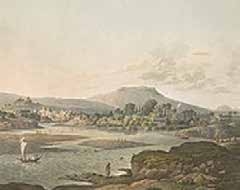
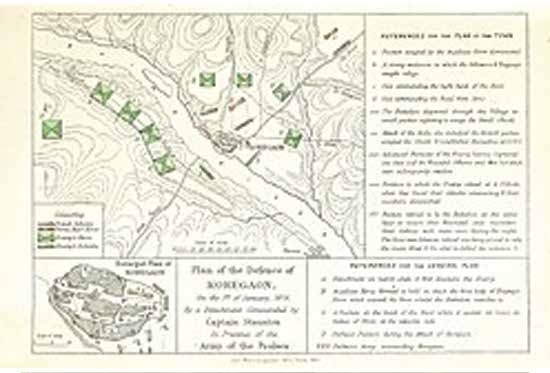
British defence plan during Battle of Koregaon
British Rule (1818–1947)
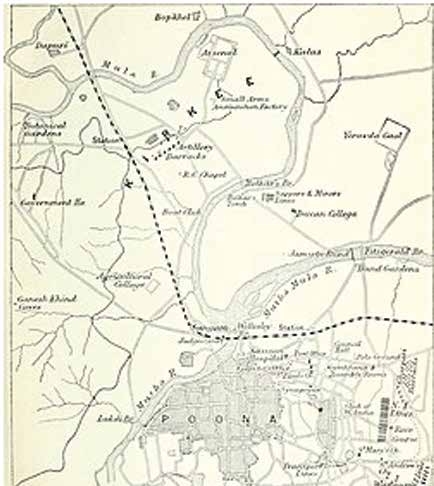
The Third Anglo-Maratha War broke out between the Marathas and the British East India Company in 1817. The Peshwas were defeated at the Battle of Khadki (then spelled Kirkee) on 5 November near Pune and the city was seized by the British. It was placed under the administration of the Bombay Presidency and the British built a large military cantonment to the east of the city (now used by the Indian Army). The old city and the cantonment areas followed different patterns of development, with the latter being developed more on European lines to cater for the needs of the British military class. The old city had narrow lanes and areas segregated by caste and religion. The settlement of the regiments of the 17 Poona Horse cavalry, the Lancashire Fusiliers, the Maratha Light Infantry, and others, led to an increase in the population. Due to its milder weather, the city became the “Monsoon capital” of the Governor of Bombay, thus making it one of the most important cities of the Bombay Presidency. The Southern Command of the Indian Army, established in 1895, is headquartered in Pune cantonment.
The city of Pune was known as Poona during British rule. Poona Municipality was established in 1858. A railway line from Bombay to the city opened in 1858, run by the Great Indian Peninsula Railway (GIPR). Navi Peth, Ganj Peth (now renamed Mahatma Phule Peth) were developed during the British Raj.
Centre of Social Reform and Nationalism
Pune was prominently associated with the struggle for Indian independence. In the period between 1875 and 1910, the city was a centre of agitation led by Gopal Krishna Gokhale and Bal Gangadhar Tilak. The city was also a centre for social reform led by Gopal Ganesh Agarkar, Mahatma Jyotirao Phule, feminist Tarabai Shinde, Dhondo Keshav Karve and Pandita Ramabai. They arrest at the Aga Khan Palace between 1942 and 1944, where both his wife Kasturba Gandhi and aide Mahadev Desai died. Savarkar used to study in Fergusson College and performed the “Holi” of foreign items near Mutha river bank.
Pune since Indian Independence
After Indian independence from the British in 1947, Pune saw enormous demanded the abolition of caste prejudice, equal rights for women, harmony between the Hindu and Muslim communities, and better schools for the poor. [55] Mahatma Gandhi was imprisoned at the Yerwada Central Jail several times and placed under house arrest at the Aga Khan Palace between 1942 and 1944, where both his wife Kasturba Gandhi and aide Mahadev Desai died. Savarkar used to study in Fergusson College and performed the “Holi” of foreign items near Mutha river bank.
The establishment of Hindustan Antibiotics in 1954 marked the beginning of industrial development in the Hadapsar, Bhosari, and Pimpri areas. MIDC provided the necessary infrastructure for new businesses to set up operations. In the 1970s, several engineering companies were set up in the city, allowing it to vie with Chennai. In the 1990s, Pune began to attract foreign capital, particularly in the information technology and engineering industries. IT parks were established in Aundh, Viman Nagar, Hinjawadi, Wagholi, Kharadi and Balewadi-Baner region. As a result, the city saw a huge influx of people due to opportunities offered by the manufacturing, and lately, the software industries.
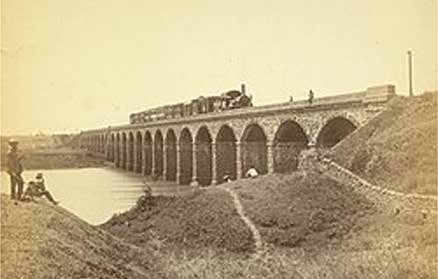
Dapoorie railway bridge in Dapodi in 1858
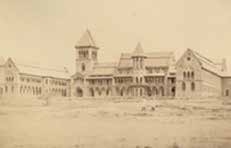
Deccan College in Poona in India Around 1875
The breach in the Panshet dam and the resulting flood of 1961 led to severe damage and the destruction of housing close to the river banks. The mishap spurred the development of new suburbs and housing complexes. To integrate urban planning, the Pune Metropolitan Region was defined in 1967 covering the area under PMC, the Pimpri-Chinchwad Municipal Corporation, the three cantonments, and the surrounding villages.
In 1998 work on the six-lane Mumbai-Pune expressway began; it was completed in 2001. In 2008, the Commonwealth Youth Games took place in Pune, which encouraged development in the northwest region of the city. On 13 February 2010, a bomb exploded at the German Bakery in the upmarket Koregaon Park neighbourhood in eastern Pune, killing 17 and injuring 60. Evidence suggested that the Indian Mujahideen terrorist group carried out the attack.
21st-century
Pune has evolved greatly since Indian Independence, from notable universities, colleges and management schools, earning it the nickname of the ‘Oxford OfThe East’, to being one of the most important automobile manufacturing hub. Pune is also home to the world’s largest vaccine manufacturer, Serum Institute of India.
Pune’s business-friendly policies and proactive local government makes it easier for global companies to establish a presence. The city offers simplified regulations and a supportive ecosystem for any manufacturing organisations / startups.
The eighth largest metropolises in India, Pune is located in the state of Maharashtra. It is the second largest city in the state after Mumbai, and is an important city in terms of its economical and industrial growth. Once the hometown of Marathas and a centre of power for the Maratha Empire, the presence of the numerous edifices in Pune links to its rich and glorious past. The city leads as the ‘veritable heartland’ of cultural Maharashtra. Pune also has made its mark as the educational epicenter winning itself the sobriquet, ‘The Oxford of the East’. Not just that, it has a growing industrial hinterland, with information technology, engineering and automotive companies sprouting. The city is known for cultural activities like classical music, spirituality, theatre, sports, and literature. Pune is a pleasant travel getaway destination to spend a quiet holiday.
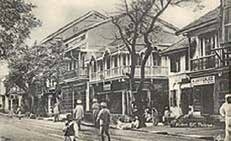
Deccan College in Poona in India Around 1875
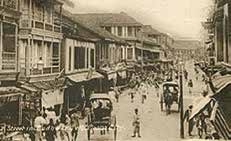
A Street in Budhwar Peth
Deccan College in Poona in India Around 1875
Pune Food
Culture & Heritage Pune Culture
Pune exemplifies an indigenous Marathi culture and ethos, in which education, arts and crafts, and theatres are given due prominence. It is the birthplace of the poet-saint Tukaram (in Dehu) and Jnaneshvara (in Alandi), the author of the well-known commentary ‘Jnaneshwari’, on the “Bhagavad Gita”. It is the home of great freedom fighters like Bal Gangadhar Tilak, Agarkar and Gopal Krishna Gokhale. Jayant Narlikar, the famous contemporary scientist, is from Pune. Pune is the seat of North Indian Classical music.
Annually, in the month of December, it hosts a three nightlong cultural program of vocal and instrumental classical music, called “Savai-Gandharva”. Pune has been an example for the blending of the culture and heritage with modernisation and its side effects. Pune is the cultural capital of the Maharashtra.
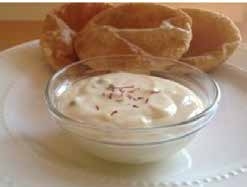
Pune, the seat of the Peshwas has retained its traditional cuisine and a special Pune meal would consist of Puran Poli (a sweet paratha with pulses/dal) Amti (masala dal), Pithla Bhakri (a masala chickpea gravy with a stiff ‘roti’), Varan Bhat (dal and rice), Matki Ki Usal (masala sprouts), Thali pith (a spicy chickpea based pancake) and Alu chi Vadi (steamed and fried, sweet n’ spicy leaves). Bakar Vadi (spicy crusty savoury) and Missal Pav (spicy mixture of onions, chilly and small savoury items, with bread) are some of the most delectable snacks. For those with a sweet tooth, Pune offers its Shrikhand (a burnt milk delicacy) and the seasonal Amras Puri (thick mango juice with fried ‘puris’) complete the traditional Maharashtrian feast.
Pune Festivals
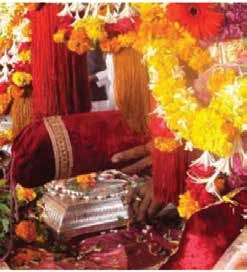
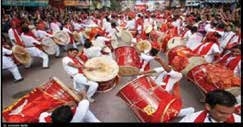
All the Indian festivals like Diwali, Janmashtami, Navaratri, Dashahara, Holi, Rakshabandhan, Christmas, Id etc are celebrated with the same excitement in Pune with no religion, language bars. But Pune is famous for its Ganesh festival.
Transport
The Pune district is the has very good connectivity – road networks include Express Highways, National Highways, State Highways, and Major District Roads. National Highway No.4 (Mumbai-Bangalore) passes through the district. Besides NH 4, NH 9 and NH 50 also originate in Pune. The total railway network coverage is of around 311 kms. It is also well connected internationally with an international airport. It is also proposed to develop a global air-cargo hub near Khed tahsil of the district.
Road Network
The district is well connected with the state capital and surrounding district headquarters through road and rail linkages. The road network consists of Express Highways, National Highways, State Highways and Major District Roads. The rail network consists of both broad gauge (Electrified and Non Electrified) double track as well as single track lines. The district headquarter has connectivity through airways for transport and trade to major airports within the country and to select international destinations. In spite of availability of perennial river stretches, there is no significant utilization of waterways in the district.
The district has total length of 13,642 km of roads(2001) of which 5394 km roads are Bituminous surface, 3554 km roads of waterbound macadam surface and 4694 km of other surface roads i.e. unmetalled road.The roads are classified according to their importance. Of the total road length in the district, 331km road length is covered by National Highways and 1368 km by State Highways. The major and other district roads have a total length of 5388 km, which passes through all the talukas. Almost all the villagesare well connected by waterbound macadam road. The total length of village roads is 6555 km.
National Highways
National Highway No. 4 (Mumbai- Banglore) – The NH-4 passes through following places in the district: Khandala, Lonavala, talegaon, Chinchwad, Pune and Khed-Shivapur. It enters from Raigad district and exits in Satara district.
Total length of NH4 in the district is 120 km. National Highway No. 9 (Pune-Solapur-Hyderabad )- The NH-9 starts at Pune district and passes through Loni, Bhigawan and Indapur. It exits in Solapur district. Total length of NH9 in the district is 152km. National Highway No. 50 (Pune-Nashik) – The NH-50 originates at Pune and passes through Chakan, Rajgurunagar, Manchar, Narayangaon, Aalephata and it exits in Nashik district. The total length of NH50 in the district is 95km.
Railway Network
The braod gauge single and double track rail length within the district have a total length of 311 km. Of these, single line is 162 km and the double line is 149 km. Pune and Daund are the two railway junctions in the district. Following are the three main railway routes passing through the district: Mumbai_pune_Solapur rail route Pune-Miraj rail route Daund-Baramti rail route.
Air Route
Pune is well connected through domestic airlines with the entire country. The airport located at Lohgaon has recently aquired status of an international airport and is being used to carry domestic as well as international traffic. Also, it is proposed to develop an international air-cargo hub near Khed tahsil of district..
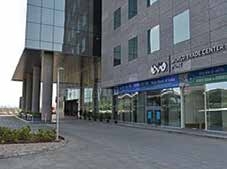
World Trade Center, Pune.
Economy
Pune is a well known manufacturing and industrial center of India. With an estimated nominal GDP of Rs.3,31,478 crores for year 2019–20, Pune District is the third largest contributor to the economy of Maharashtra Maharashtra, after Mumbai and Thane. Pune has the fifth largest metropolitan economy and the sixth highest per capita income in the country. As per the Directorate of Economics and Statistics (Government of Maharashtra), the GDP per capita of Pune District in 2019–20 was Rs. 3,16,848. In 2014–15, the manufacturing sector provided employment to over 500,000 people.
Manufacturing
Pune is a major industrial hub in India, known for its strong presence in the Information Technology (IT), automotive, and manufacturing sectors. Its diverse economy also includes prominent pharmaceutical, biotechnology, and food processing industries.
The formation of MIDC in 1962 resulted in a constant process of industrial land acquisition and the creation of required support infrastructure. Since then, there has been a massive influx of several European companies who continue to be keen on setting up manufacturing facilities in the city. The city serves as headquarters to many companies. Major industrial areas around Punere Chakan, Chinchwad, Bhosari, Pirangut, Hinjawadi, Talegaon, Talawade, Urse.
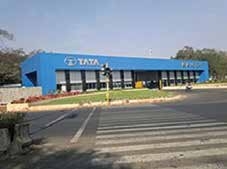
Tata motors vehicle manufacturing plant in Chinchwad
Key industries in Pune
Due to its location and connectivity, it has emerged as one of the leading export districts of Maharashtra. The district has developed into a major hub of several industries including auto and auto components, electrical, pharmaceuticals, food processing, electronics, etc.
Availability of sector-specific infrastructure and skilled manpower has also made the district a sought after destination for industry.
Automotive and manufacturing
The “Pune Industrial Belt” is home to numerous large-scale industrial zones, with a significant concentration of automotive and engineering companies.
Major players: The area hosts production plants and facilities for both global and Indian companies, including Volkswagen, Mercedes-Benz, Tata Motors, and Bajaj Auto. Bajaj Auto, headquartered in Pune, is ranked as the world’s fourth largest two and three wheeler manufacturer. The Independent referred Chakan as India’s “Motor City”.
The city is known for its automotive industry. A large number of automobile companies such as Bajaj Auto, Tata Motors, Mahindra & Mahindra, Skoda cars, Mercedes Benz, Force Motors, Kinetic Motors, General Motors, Land Rover, Jaguar, Renault, Volkswagen, and Fiat have there manufacturing plants in Chakan.
As of August 2023, Tesla, Inc. has leased a space in Pune, marking its initial step towards establishing a presence in India.
Industrial hubs: Key manufacturing areas include
Pimpri-Chinchwad,often cited as one of Asia’s largest industrial zones, and Chakan, known as the “Automobile Hub of India”.
Manufacturing variety: The manufacturing sector includes a wide range of products, such as auto components, machinery, and specialty chemicals. The Kirloskar Group, one of India’s largest manufacturers and exporters of pumps and the largest infrastructure pumping project contractor in Asia, is headquartered in Pune.
Kalyani Group headquartered in Pune owns Bharat Forge which operates world’s largest single location forging facility consisting of fully automated forging press lines and state-of-the-art machining facility in Pune.
Serum Institute of India, the world’s fifth largest vaccine producer by volume, is based in Pune.
Information Technology (IT) and IT-enabled services (IT/ITeS)
Pune is a top IT hub in India, with a large number of multinational corporations (MNCs) and local companies.
- Leading companies: Major IT firms with a significant presence in the city include Tata Consultancy Services (TCS), Persistent Systems, Infosys, and Tech Mahindra.
- Technology focus: The industry specializes in software development, IT consulting, business process services, and advancements in AI and data analytics.
- Global tech giants: International technology companies such as Google and Microsoft also have offices in Pune.
Pharmaceuticals and biotechnology
A thriving pharmaceuticals and life sciences industry contributes significantly to Pune’s economy.
- Research and development: The city features robust R&D facilities that have attracted many companies.
- Global and local companies: Major players like Sun Pharmaceutical and Cipla have a presence in the region.
- Production: Maharashtra, of which Pune is a key part, accounts for a substantial portion of the country’s pharmaceutical production.
Food processing
Capitalizing on Maharashtra’s agricultural output, Pune has developed a strong food processing industry.
- Segments: The industry covers a variety of segments, including the processing of fruits, vegetables, and dairy products.
- Infrastructure: The city’s strategic location and logistics infrastructure make it an ideal hub for this sector.
- Major companies: Multinational food companies and local players operate within and around Pune.
Defense and aerospace
Pune is an important center for India’s defense sector, hosting manufacturing and R&D facilities.
- Bharat Forge: Defense companies in Pune include entities connected to Bharat Forge, which is a major forging company in India.
- Larsen & Toubro: This multinational conglomerate has a Strategic Systems Complex in Pune for developing and testing defense products.
Exports from Pune
As per a recent report by the Government of Maharashtra in FY 2023- 24, Pune’s total exports amounted to INR 109148Cr which is around 20% of Maharashtra’s total exports during that period.
Also, as per the District Investment Summit 2024, Pune district secured the highest amount of investment with INR 16651.48Cr. The demand for Pune is also evident from the fact that Pune has emerged as the top industrial real-estate market in 2024 outperforming Delhi-NCR and Mumbai.



© Copyright , All rights reserved. Design by Andreal