







VOL. 19, ISSUE NO. 5 | August 2026

MONTHLY MUSINGS
From the Chairman’s Desk
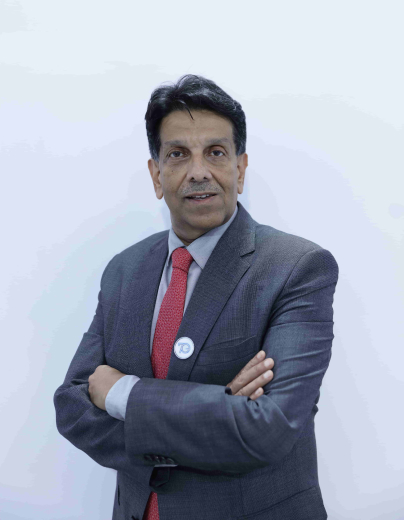
Pankaj Chadha
India’s engineering exports have maintained a strong momentum in the opening months of fiscal 2026-27, even as the global trading environment remains increasingly uncertain and uneven. Engineering exports reached USD 11.48 billion in June 2026, registering a robust 20.74 per cent year-on-year growth, while cumulative exports during first quarter that is April-June 2026-27 rose to USD 34.14 billion, an impressive 18.09 per cent increase over the corresponding period of the previous year. Notably, engineering exports grew faster than India’s overall merchandise exports, which increased by 15.92 per cent during the same period. Engineering’s share in India’s merchandise exports consequently rose to 26.4 per cent in the first quarter. Importantly, exports remained above USD 10 billion in each month of the first quarter, which may indicate a strengthening export base.This performance becomes particularly significant when viewed against the latest global trade trends. UNCTAD’s Global Trade Update for July-August 2026 indicates that global goods trade expanded strongly in the first half of 2026, reaching an estimated USD 13.7 trillion, about 12.5 per cent higher than in the first half of 2025. However, UNCTAD cautions that a significant part of this increase reflects higher prices, particularly for energy, transport and logistics, rather than an equivalent increase in trade volumes and an increasingly uneven recovery. The latest WTO indicators similarly point to resilience, but not a broad-based acceleration in world trade. The WTO Goods Trade Barometer stood at 101.7 in June 2026, indicating that merchandise trade volumes remained above trend, although the index had eased from 102.3 earlier in the year. Against this backdrop, India’s 18.1 per cent growth in engineering exports compares favourably with the broader expansion in global goods trade.
The geographical pattern of India’s engineering trade is interesting. All major regions recorded growth in India’s engineering exports during April–June 2026–27. North America remained the largest market, accounting for 20% of exports, followed by the European Union at 17%, WANA at 14%, ASEAN at 11% and North-East Asia at 9%. ASEAN and North-East Asia were among the fastest-growing regional markets, expanding by 23% and 33%, respectively. This diversification is significant at a time when global trade recovery becomes increasingly uneven with growing South-South trade, increasing trade fragmentation and geopolitical tensions disrupting energy markets and shipping routes.
Panel-wise exports also indicate that the strength of India’s engineering exports is broad-based across different sectors. During April-June 2026-27, non-ferrous metals emerged as an important growth driver, with exports of copper and products increasing by 89 per cent and aluminium and products by 56 per cent. Electrical machinery exports grew by 21 per cent, automobiles by 13 per cent, while ships, boats and floating structures recorded an exceptional 83 per cent growth. Iron and steel exports also increased by 11 per cent. With the UNCTAD projecting significant first quarter growth technology-intensive products, India’s strong performance in metals and electrical machinery may indicate that Indian exporters are participating in several segments aligned with global industrial demand
While the latest trade updates record positive trends across globe, they also urge countries to remain cautious. Higher energy and shipping costs, geopolitical tensions, protectionist measures and increasingly stringent technical and regulatory requirements could raise the cost of market access. UNCTAD notes that non-tariff measures such as technical regulations, health and safety requirements and certification procedures remain a major source of trade costs, particularly for developing economies. For Indian engineering exporters, therefore, sustaining the present momentum will require greater competitiveness, scale, technological upgrading, compliance capacity and market diversification.
In terms of market diversification, participation in key trade expos across the world plays very important role. EEPC India has been conducting a number of events in new markets. In coming month that is September 2026, EEPC would be participating in five major events – major exhibitions in the fields of energy, auto component, defense and pharma machinery in Dubai, Frankfurt and India respectively. Apart from this, EEPC India is also taking a trade delegation to Slovenia in the last week of September. I would request my fellow members to visit the EEPC official website to get more details on these events.
Overall, India’s engineering export story in the first quarter of 2026-27 remains one of strong performance amid an uneven global recovery. However, sustaining this advantage will depend on how effectively Indian exporters navigate rising trade costs, geopolitical risks and a more fragmented global trading system. The support from the Government of India will also play a significant role to ensure that the export growth remains sustainable in this growing uncertainty.

Pankaj Chadha
© Copyright , All rights reserved. Design by Andreal