







VOL. 19, ISSUE NO. 5 | August 2026

Spotlight





INDIA-UK ECONOMIC PARTNERSHIP: ADVANCING ENGINEERING TRADE THROUGH CETA
UNLOCKING NEW OPPORTUNITIES FOR INDIAN ENGINEERING SECTOR

India-UK Relations
The India-UK Comprehensive Economic and Trade Agreement (CETA) was signed on 24th July 2025, marking a significant milestone in bilateral trade relations and reinforcing the commitment of both nations to strengthen economic cooperation. The Agreement entered into force on 15th July 2026 following the completion of ratification procedures by both countries. Since its implementation, CETA has been creating new opportunities for businesses through enhanced market access, reduced trade barriers, improved services commitments, and stronger investment and professional mobility frameworks, thereby paving the way for deeper India-UK economic engagement.
UK Scenario
UK GDP will grow by 0.9% in 2026, a slight increase from the 0.8% growth projected in May. GDP growth is then expected to rise to 1.2% in 2027, in line with the previous forecast.
The UK economy’s performance in the second quarter of 2026 was better than previously anticipated as oil prices returned to pre-conflict levels more quickly than expected, preventing a more significant increase in inflation. However, the recent escalation of the conflict and disruption in the Strait of Hormuz and the subsequent impact on energy prices and inflation are projected to weigh on growth towards the end of the year, while a prolonged closure could cause the UK economy to contract next year.
The Outlook’s baseline forecast is based on the Strait of Hormuz reopening by the end of Q3 2026, albeit with subdued levels of tanker traffic. However, if there is an escalation in the conflict and the strait remains closed until early or mid-2027, the Outlook’s model suggests that UK GDP growth could fall to 0.5% this year and contract by 0.2% in 2027.
India’s Trade with the UK
India’s merchandise trade with the United Kingdom has witnessed significant developments over the last four financial years. India’s exports to the UK increased steadily from US$ 11.41 billion in FY 2022-23 to US$ 12.92 billion in FY 2023-24, and further to US$ 14.55 billion in FY 2024-25, registering annual growth of approximately 13% in both FY 2023-24 and FY 2024-25. This sustained growth reflects strong demand in the UK for Indian products such as engineering goods, pharmaceuticals, textiles, petroleum products, machinery, and automobile components. However, in FY 2025-26, exports declined by 8% to US$ 13.44 billion, indicating a moderation in trade momentum amid changing global economic conditions.
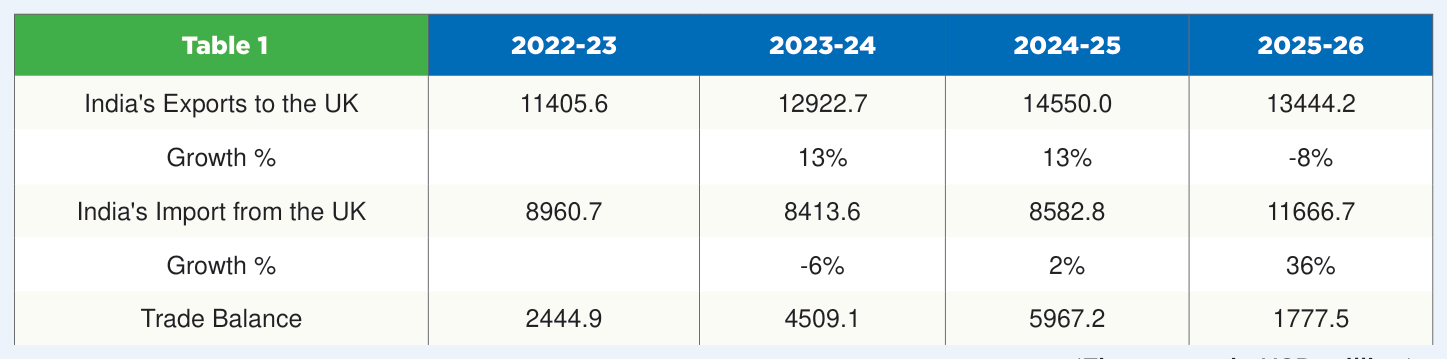
On the import side, India’s imports from the UK declined by 6% from US$ 8.96 billion in FY 2022-23 to US$ 8.41 billion in FY 2023-24, before recovering marginally by 2% to US$ 8.58 billion in FY 2024-25. In FY 2025-26, imports rose sharply by 36% to US$ 11.67 billion, significantly narrowing India’s trade surplus with the UK. As a result, India’s trade balance improved from US$ 2.44 billion in FY 2022-23 to a peak of US$ 5.97 billion in FY 2024-25, before declining to US$ 1.78 billion in FY 2025-26 due to the combined impact of lower exports and substantially higher imports. Despite this recent moderation, the overall trend underscores the growing depth of India-UK economic ties and provides a strong foundation for further expansion of bilateral trade under the recently concluded India-UK trade agreement.
Source: DGCI&S
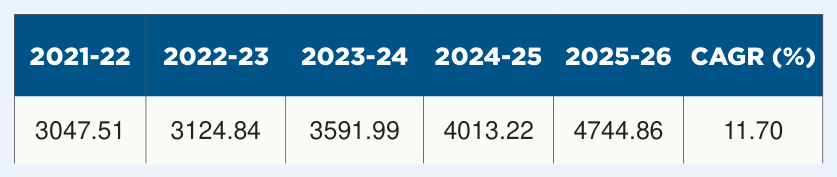
Table 2: India’s Engineering Exports to UK in Recent Years (USD Million)
Source: DGCI&S
India’s engineering exports to the United Kingdom have exhibited a strong and sustained growth trajectory in the post COVID period, underscoring the increasing depth of bilateral trade ties and the growing competitiveness of Indian engineering products in the UK market. Exports increased from USD 3.05 billion in FY 2021-22 to USD 3.12 billion in FY 2022-23, rising further to USD 3.59 billion in FY 2023-24, USD 4.01 billion in FY 2024-25, and reaching a record USD 4.74 billion in FY 2025-26. This robust performance translates into an impressive compound annual growth rate (CAGR) of 11.7% over the five-year period, with exports now nearing the significant USD 5 billion milestone. The growth reflects expanding UK demand for Indian engineering goods across sectors such as iron and steel products, industrial machinery, electrical equipment, transport equipment, and auto components.
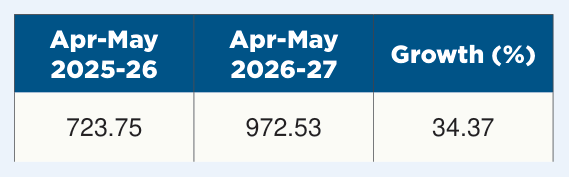
The positive momentum has continued into the current fiscal year as well. During April-May 2026-27, India’s engineering exports to the UK stood at USD 972.53 million, compared to USD 723.75 million during the corresponding period of April-May 2025-26, registering a strong growth of 34.4%. This encouraging performance indicates sustained market demand and growing opportunities for Indian exporters. With the implementation of the India-UK Comprehensive Economic and Trade Agreement (CETA), engineering exports are expected to gain further impetus through improved market access, lower trade barriers, and enhanced bilateral business cooperation. Given the current growth trajectory, India’s engineering exports to the UK are well-positioned to cross the USD 5 billion mark in the ongoing fiscal year, reinforcing the UK’s importance as a strategic export destination for India’s engineering sector.
Table 3: Major Engineering product Groups Exported to the UK (USD Million)
| Product Group | 2024-25 | 2025-26 | Growth (%) |
| ELECTRIC MACHINERY AND EQUIPMENT | 1213.44 | 1467.24 | 20.92 |
| IRON AND STEEL | 526.96 | 566.69 | 7.54 |
| PRODUCTS OF IRON AND STEEL | 341.15 | 326.73 | -4.23 |
| OTHER CONSTRUCTION MACHINERY | 234.48 | 292.03 | 24.54 |
| OTHER MISC. ENGINEERING ITEMS | 207.76 | 235.43 | 13.31 |
| IC ENGINES AND PARTS | 192.46 | 220.45 | 14.54 |
| AIRCRAFT, SPACECRAFT AND PARTS | 154.86 | 186.38 | 20.35 |
| MOTOR VEHICLE/CARS | 2.75 | 172.52 | 6176.23 |
| AUTO COMPONENTS/PARTS | 158.10 | 163.23 | 3.25 |
| INDUSTRIAL MACHINERY FOR DAIRY ETC | 124.62 | 157.60 | 26.47 |
| OTH NON FEROUS METAL AND PRODUCTS | 103.34 | 110.25 | 6.69 |
| MEDICAL AND SCIENTIFIC INSTRUMENTS | 103.43 | 104.68 | 1.21 |
| AUTO TYRES AND TUBES | 93.89 | 103.42 | 10.15 |
| ALUMINIUM, PRODUCTS OF ALUMINM | 94.04 | 100.30 | 6.65 |
| ATM, INJCTNG MLDING MCHNRY ETC | 89.56 | 89.40 | -0.19 |
| AC, REFRIGERATION MACHNRY ETC | 19.24 | 80.42 | 317.90 |
| CRANES, LIFTS AND WINCHES | 59.95 | 59.43 | -0.87 |
| OTHR RUBBER PRODCT EXCPT FOOTW | 57.68 | 57.84 | 0.28 |
| TWO AND THREE WHEELERS | 50.03 | 51.31 | 2.56 |
| PUMPS OF ALL TYPES | 44.16 | 49.17 | 11.36 |
| COPPER AND PRDCTS MADE OF COPR | 35.81 | 44.41 | 24.00 |
| HND TOOL, CTTNG TOOL OF METALS | 29.44 | 27.39 | -6.94 |
| NICKEL, PRODUCT MADE OF NICKEL | 19.05 | 24.03 | 26.16 |
| BICYCLE AND PARTS | 19.10 | 18.23 | -4.56 |
| MACHINE TOOLS | 15.96 | 13.82 | -13.42 |
India’s engineering exports to the UK are led by electrical machinery and equipment, which remained the largest export segment with exports rising by 20.9% to USD 1.47 billion in 2025-26. Other major contributors included iron and steel (USD 566.7 million), products of iron and steel (USD 326.7 million), and construction machinery (USD 292.0 million).
Several engineering sectors recorded strong growth during the year, including construction machinery (24.5%), industrial machinery (26.5%), aircraft and spacecraft parts (20.4%), IC engines and parts (14.5%), and copper products (24.0%). Notably, exports of motor vehicles and cars witnessed exceptional growth, rising to USD 172.5 million from a low base.
The export profile reflects the increasing diversification of India’s engineering exports towards higher-value sectors such as electrical equipment, automotive products, aerospace components, industrial machinery, and metal products. With the implementation of the India-UK CETA, these sectors are expected to benefit from enhanced market access and further growth opportunities in the UK market.
Benefit for Engineering Sector
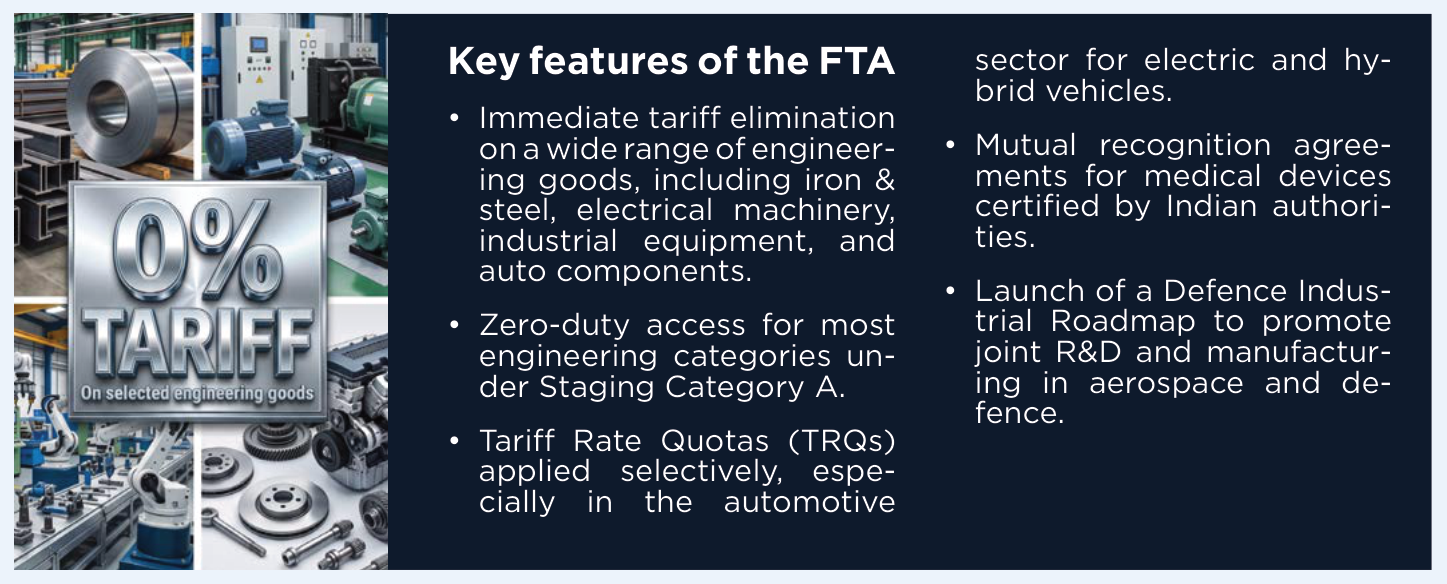
The CETA introduces comprehensive tariff liberalization, with zero-duty access granted to a wide range of Indian engineering products. The UK has offered Staging Category A for most engineering goods, meaning immediate tariff elimination. Select products, especially in the automotive sector, are subject to Tariff Rate Quotas (TRQs) and phased liberalization over 5–10 years. The engineering sectorstands to gain immensely from the CETA.
The agreement also includes:
- Mutual recognition of standards for medical devices.
- A Defence Industrial Roadmap for aerospace and defence collaboration.
- Provisions to safeguard Indian interests in case of adverse effects from UK’s proposed Carbon Border Adjustment Mechanism (CBAM).
Overview of UK’s Tariff Offer
Under the India–UK CETA, the UK has extended immediate tariff elimination (Staging Category A) across a wide range of engineering goods. This includes sectors such as:
- Iron and steel
- Non-ferrous metals
- Machinery and electrical equipment
- Automotive components
- Medical devices
- Aerospace and defence products
Selective use of Tariff Rate Quotas (TRQs) has been applied to sensitive automotive categories, particularly electric and hybrid vehicles.
Benefits for Some important segments of engineering
A. Steel and steel products (HS Chapters 72–73)
- Tariffs on iron and steel products have been fully eliminated, benefiting India’s large MSME base.
- Products include semi-finished steel, cast iron articles, screws, nuts, bolts, and welded materials.
- With the United Kingdom’s import demand valued at USD 18.49 billion as on 2025, India presently sharing 4.4% of this market. This relatively small share indicates considerable potential for expansion after the tariff rationalization post FTA.
B. Non-ferrous metals (HS Chapters 74–81)
- Includes copper, aluminium, nickel, zinc, lead, and tin.
- All categories now face 0% tariffs, enhancing competitiveness.
- India’s exports to the UK are currently around USD 153 million, just 1.2% of UK’s demand as on 2025.
- UK global imports in 2025 was USD 12.6 billion of these metals.
- Focused investment and scaling could unlock USD 1.1–1.65 billion in exports.
C. Industrial and Electrical Machinery (HS Chapters 84–85)
- Full tariff elimination supports integration into UK’s advanced manufacturing supply chains.
- India’s exports to the UK in these categories total USD 3.7 billion, just 1.9% of UK’s USD 191 billion import demand.
- Key exports include turbojets, gears, motors, generators, optical fibres, and automation systems.
- Capturing 5–7% of UK’s market could contribute USD 8–11.5 billion.
D. Automotive Sector (HS Chapter 87)
- Conventional vehicles and auto components receive duty-free access.
- Electric and hybrid vehicles are under TRQs, with no concessions for the first 5 years.
- India’s exports include brakes, suspensions, gearboxes, tyres, and low-value auto parts.
- The FTA encourages joint ventures, technology transfer, and R&D in clean mobility.
- India has secured phased duty reductions over 5–10 years, protecting sensitive segments.
E. Aerospace and Defence (HS Chapters 88 & 93)
- Full liberalization enables exports of aircraft components and defence products.
- The Defence Industrial Roadmap promotes joint manufacturing, technology transfer, and research.
- Supports India’s “Make in India” initiative and strategic autonomy in defence production.
F. Medical Devices and Instruments (HS Chapter 90)
- Zero tariffs on surgical and diagnostic equipment.
- Exports to the UK are USD 243 million, accounting for around 1% of UK’s global demand.
- Includes X-ray systems, surgical instruments, and diagnostic tools.
- The FTA includes mutual recognition of Indian certifications (CDSCO, ICMED), easing market access.
G. Other Engineering Goods
- Categories like ships (HS 89), aircraft (HS 88), rail equipment (HS 86), tools (HS 82), and musical instruments (HS 92) now enjoy zero tariffs.
- UK demand in aircraft and precision instruments exceeds USD 35 billion, but India’s share is modest.
- Strategic scaling and targeted promotion can unlock USD 700M–1B in additional exports.
Export projections and growth potential
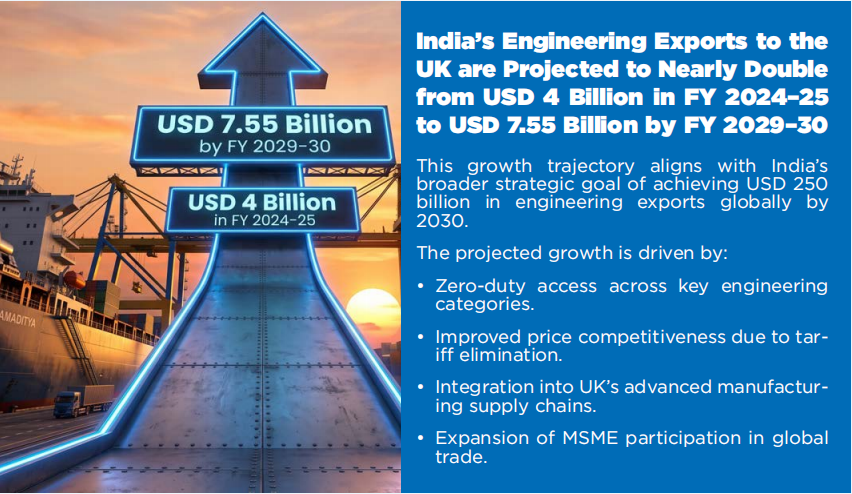
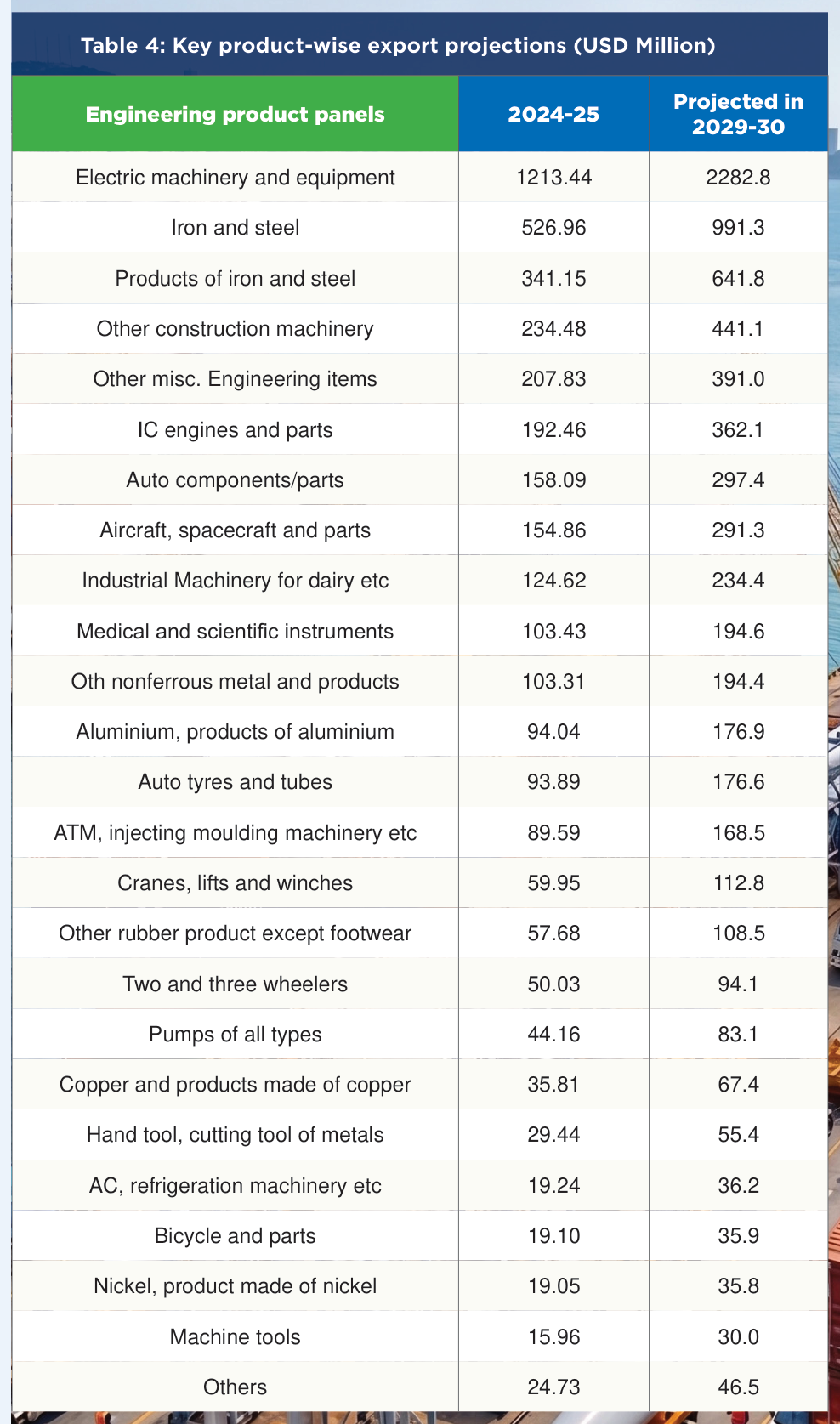
The signing of the India–UK Comprehensive Economic and Trade Agreement (CETA) in July 2025 marks a transformative moment for India’s engineering export sector. With the UK offering immediate tariff elimination across most engineering categories, the agreement is expected to significantly boost India’s export volumes over the next five years.
Overall Export Growth Forecast

Issues:
Steel TRQ Issue Imposed on Indian Exporters Despite India-UK CETA
The UK Government’s decision to introduce stricter steel trade measures from 1 July 2026, including revised Tariff Rate Quotas (TRQs) and a 50% tariff on imports exceeding quota limits, has emerged as a significant concern for Indian steel exporters. Despite the conclusion of the India-UK Comprehensive Economic and Trade Agreement (CETA), Indian steel exports remain subject to restrictive quota arrangements and high outof-quota duties. As most Indian exports fall under the residual quota category, exporters face uncertainty regarding quota availability, heightened competition, and the risk of quota exhaustion, thereby limiting effective market access. These measures dilute the anticipated benefits of CETA, necessitating Government intervention to secure fair market access and ensure that Indian exporters can fully benefit from the trade agreement.
In view of the India-UK CETA and the shared objective of doubling bilateral trade by 2030, members have urged government intervention, recommending either a single global quota system on a first-come-first-served basis or higher country-specific quotas for India, along with strict Rules of Origin based on “melt and pour” criteria to prevent trade diversion and ensure fair market access.
Carbon Costs and CBAM
The growing emphasis on decarbonisation in international trade is reshaping the global steel industry. The European Union’s Carbon Border Adjustment Mechanism (CBAM) introduces a carbon price on imported carbon-intensive products, including steel, to align them with the carbon costs borne by EU producers. As carbon costs increasingly become a key determinant of competitiveness, exporters from countries with relatively carbon-intensive production processes may face higher compliance costs and market access challenges. At the same time, the UK is moving towards the implementation of its own CBAM from January 2027, signalling a broader global shift towards carbon-linked trade regulations. These developments are expected to influence investment decisions, encourage the adoption of cleaner production technologies, and accelerate the transition towards low-carbon manufacturing across the steel value chain.
To conclude…
While the signing of the India-UK Comprehensive Economic and Trade Agreement (CETA) represents a landmark step towards deepening bilateral trade and economic cooperation, the full potential of the agreement can only be realized if the key market access challenges confronting Indian exporters are effectively addressed. The continued application of restrictive steel safeguard measures, including Tariff Rate Quotas (TRQs), quota-related uncertainties, and the imposition of a 50% out-of-quota duty, significantly dilutes the benefits envisaged under the agreement. In parallel, the growing emergence of carbon-related trade regulations, including the EU’s CBAM and the UK’s planned CBAM framework, is creating additional compliance burdens and competitiveness challenges for carbon-intensive sectors such as steel. Unless adequate mechanisms are put in place to address these issues and support exporters in mitigating future carbon-related trade costs, the intended gains from the India-UK CETA may remain constrained.
This assumes greater importance in light of the ambitious objective of increasing India’s exports to the UK from approximately USD 4 billion in FY 2024-25 to USD 7.55 billion by FY 2029-30. Achieving this target will require not only tariff liberalisation through CETA but also meaningful resolution of non-tariff barriers, improved market access conditions, predictable quota arrangements, and collaborative efforts to address emerging sustainability and carbon compliance requirements. Unless these concerns are addressed in a timely and practical manner, the effectiveness of the India-UK CETA will remain limited, and the anticipated expansion of bilateral trade may not materialize to its full extent. A more enabling trade environment is therefore essential to ensure that the agreement delivers its intended benefits, strengthens industrial cooperation, enhances export competitiveness, and promotes sustained growth in trade between the two nations.

© Copyright , All rights reserved. Design by Andreal