







VOL. 19, ISSUE NO. 5 | August 2026

Focus





INDIAN ENGINEERING EXPORTS l AUGUST 2026
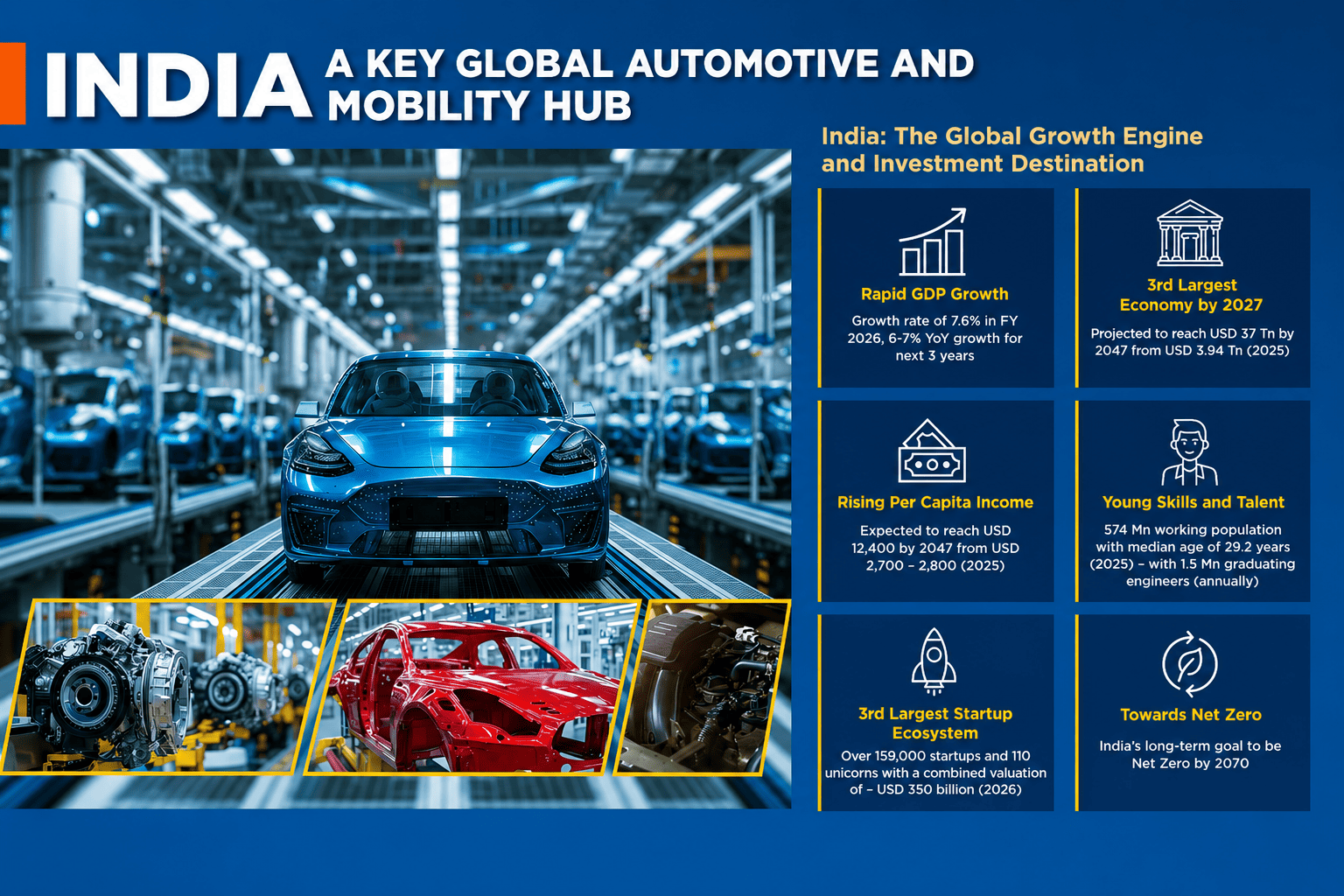
Opportunity India – India’s Promises
- 73USD Bn* Production Linked Incentive Scheme for Automobile and Auto Components
- 91USD Bn* Production Linked Incentive Scheme for Advanced Chemistry Cell Battery Storage
- 15USD Bn* PM Electric Drive Revolution in Innovative Vehicle Enhancement (PM E-DRIVE) Scheme outlay to promote E- mobility in India
15% Import Duty - India’s EV policy offers concessional 15% import duty to global OEMs, linked to ~500 Mn investment and local manufacturing commitments
100% FDI allowed under the automatic route commitments
7.1% of India’s GDP
49% of India’s Manufacturing GDP as per the latest data update
15% contribution to GST as per latest data update
30Mn contribution to GST as per latest data update
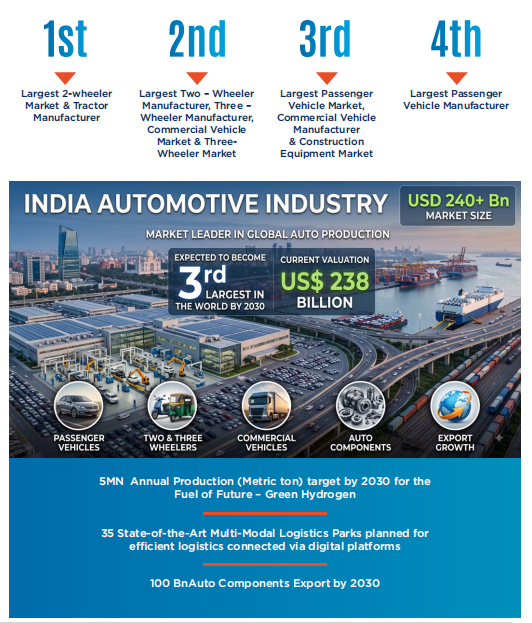
India is one of the fastest growing econo-mies of the world and is poised to continue on this path, with aspirations to reach high middle income status by 2047, the centenary of Indian independence. This pace in growth combined with rising incomes along with a boost in infrastructure spending and increased manufacturing incentives, has accelerated the growth of automobile industry.
The Indian automotive industry has seen significant growth and is currently valued at over US$ 238 billion.. It contributes approximately 6.8% to India’s GDP and 14-15% to the GST. The industry is a major player in global markets, particularly in segments like Passenger Cars, Utility Vehicles, Vans and two Wheelers is expected to reach US$ 300 billion by 2026. The sector is also expected to become the third largest in the world by 2030
This momentum in the Indian automobile sector has led India to develop and strengthen its expertise in automobiles and auto components. Thus the Indian automobile industry has had a considerable impact on the auto component industry.
India’s auto component industry is an important sector driving macroeconomic growth and employment. The industry comprises players of all sizes, from large corporations to micro entities, spread across clusters throughout the country. Due to the high development prospects in all vehicle industry segments the Indian auto components industry is projected to record US$ 200 billion in revenue by 2026 the aftermarket of the industry is expected to reach US$ 30 billion.( Source IBEF)
The auto component industry in India is composed of organized and unorganized sector. The organized sector refers to original equipment manufacturers (OEMs) and is engaged in the manufacture of high-value precision instruments. Whereas, the unorganized sectors comprise of low-valued products catering to after-market services. The growth of global original equipment manufacturers’ (OEM) sourcing from India & the increased indigenisation of global OEMs is turning India into a preferable designing and manufacturing base. This leads to 8% of India’s R&D expenditure getting invested in the automotive sector.
By FY28, the Indian auto industry aims to invest Rs. 58,000 crore (US$ 7 billion) to boost localization of advanced components like electric motors and automatic transmissions, reducing imports and leveraging ‘China Plus One’ trend.
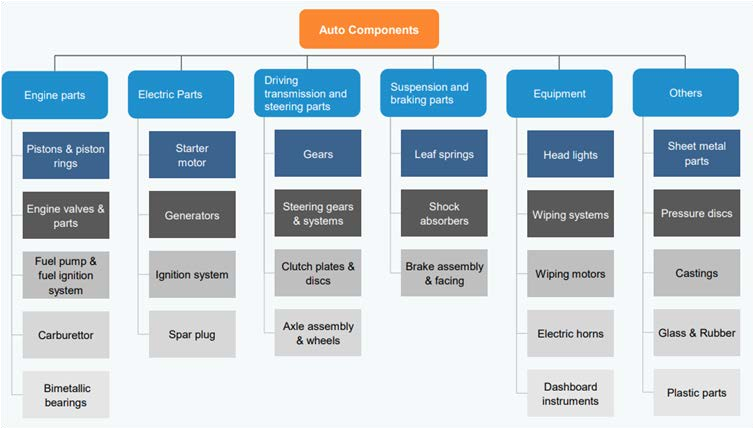
Various sub-sectors of the Auto components & parts industry in India are as follows:
I. ROBUST GROWTH OF THE INDIAN AUTO COMPONENTS & PARTS
- The automobile component industry turnover stood at Rs. 6.14 lakh crore (US$ 74.1 billion) during FY24, registering a revenue growth of 9.8% as compared to FY23.
- Domestic OEM supplies contributed ~54% to the industry’s turnover, followed by domestic aftermarket (~10%) and exports (~18%), in FY24.
- The component sales to OEMs in the domestic market grew by 8.9% to Rs. 5.18 lakh crore (US$ 62.4 billion).
- During FY24, exports of auto components grew by 5.5% to US$ 21.2 billion. As per the Automobile Component Manufacturers Association (ACMA) forecast, automobile component exports from India are expected to reach US$ 30 billion by 2026. In FY22, India’s auto component Industry for the first time reached a trade surplus of US$ 700 million.
- The aftermarket for auto components grew by 10.0% during FY24reaching Rs. 9.38 lakh crore (US$ 11.3 billion).
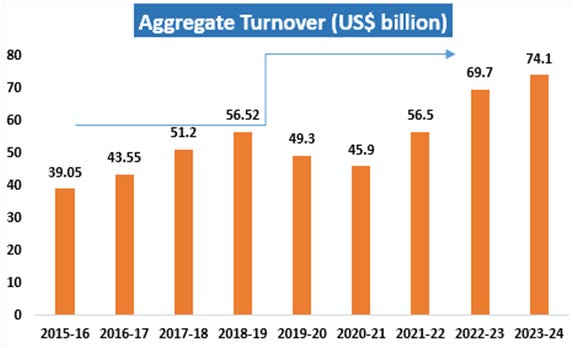
Source: ACMA
Share in Turnover of the Auto Components Industry (FY24)
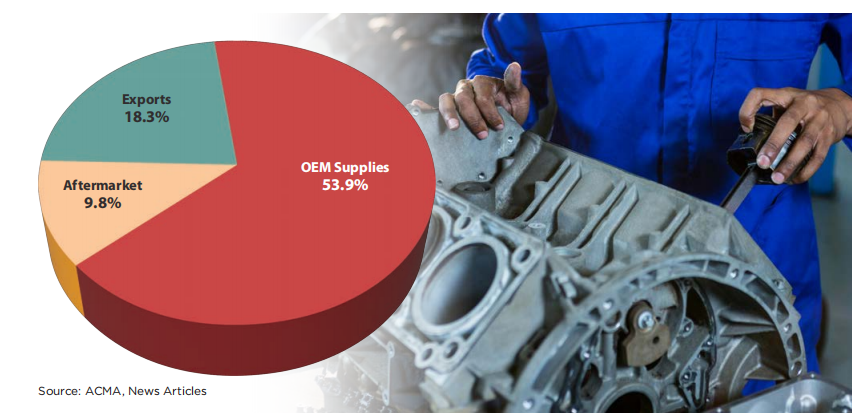
Source: ACMA, News Articles
II. EXPORT GROWTH
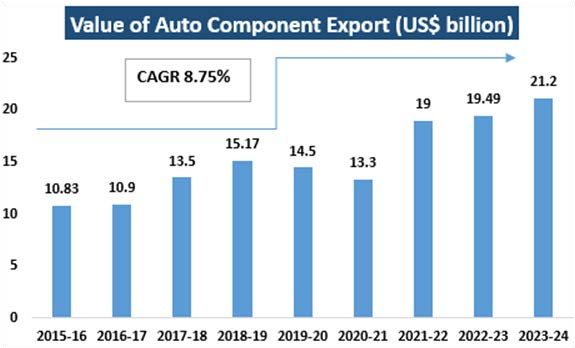
- Exports of automobile components from India increased, at a CAGR of 8.75%, from US$ 10.83 billion in FY16 to US$ 21.20 billion in FY23.
- During FY24, exports of auto components grew by 5.5% to US$ 21.2 billion. As per the Automobile Component Manufacturers Association (ACMA) forecast, automobile component exports from India are expected to reach US$ 30 billion by 2026. In FY22, India’s auto component Industry for the first time reached a trade surplus of US$ 700 million
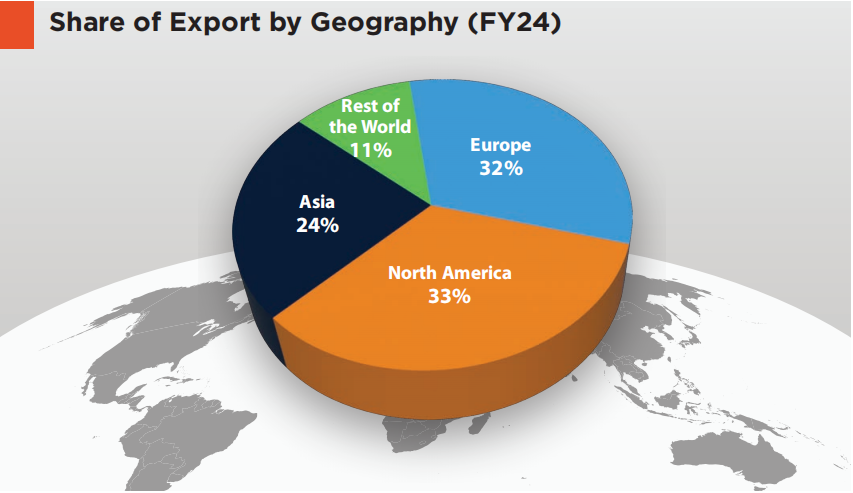
- In FY24, North America, which accounts for 32% of total exports, increased by 5%, while Europe and Asia, which account for 33% and 24% of total exports, increased by 12% and growth for Asia remained flat, respectively. The key export items included drive transmission and steering, engine components, body/chassis, suspension and braking etc.
Value of Auto Components Export (US$ billion)
Source: ACMA
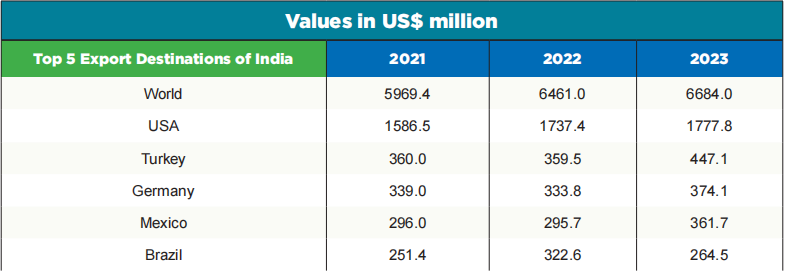
A. INDIA’S TOP FIVE EXPORT DESTINATION IN THE LAST 3 YEARS
USA ranks as the numero uno destination of India’s export of Auto components & parts importing 27 percent of India’s export of the same in 2023. The share of other top nations are Turkey (6.7%), Germany (5.6%), Mexico (5.4%) and Brazil (4%).
Table 1: India’s Top 5 Export Destinations over 2021 - 2023
Source: ITC Trade Database
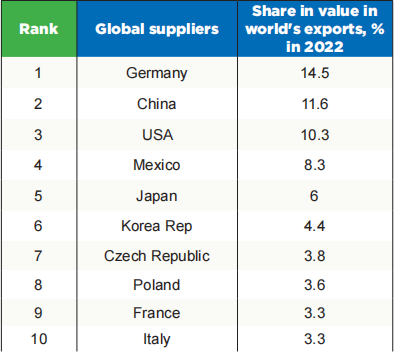
B. GLOBAL MAJOR SUPPLIERS OF AUTO COMPONENTS & PARTS IN THE WORLD MARKET AND VIZ-A-VIZ INDIA’S RANK IN 2023
Table 2: India’s rank as a global supplier of Auto components & Parts in 2023
III. AFTERMARKET GROWTH
- The aftermarket for auto components grew by 10.0% during 2023-24 reaching Rs. 93,886 crore (US$ 11.3 billion)
- By 2028, the domestic automotive aftermarket segment in India is expected to reach US$ 14 billion.
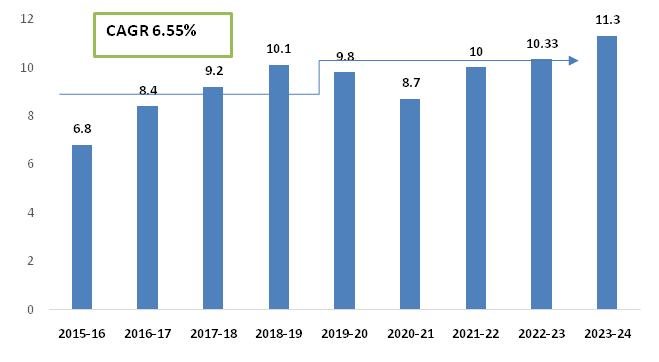
- Aftermarket turnover increased at a CAGR of 6.55% from US$ 6.80 billion in FY16 to US$ 11.30 billion in FY24 and is expected to reach US$ 32 billion by FY2026.
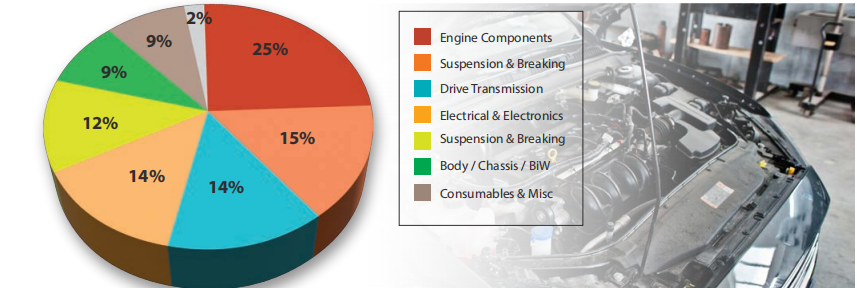
- The ‘Drive Transmission and Steering’ product category accounted for 21% of the aftermarket share followed by ‘Engine Components’, and ‘Electricals and Electronic Components’ with 19% and 18%, respectively.
- To support local auto parts suppliers, the auto component sector has tied up with Tesla to manufacture electric vehicles in August 2021.

lion)
Value of Aftermarket Turnover (US$ billion)
Product-wise Share in Aftermarket Turnover (FY22)
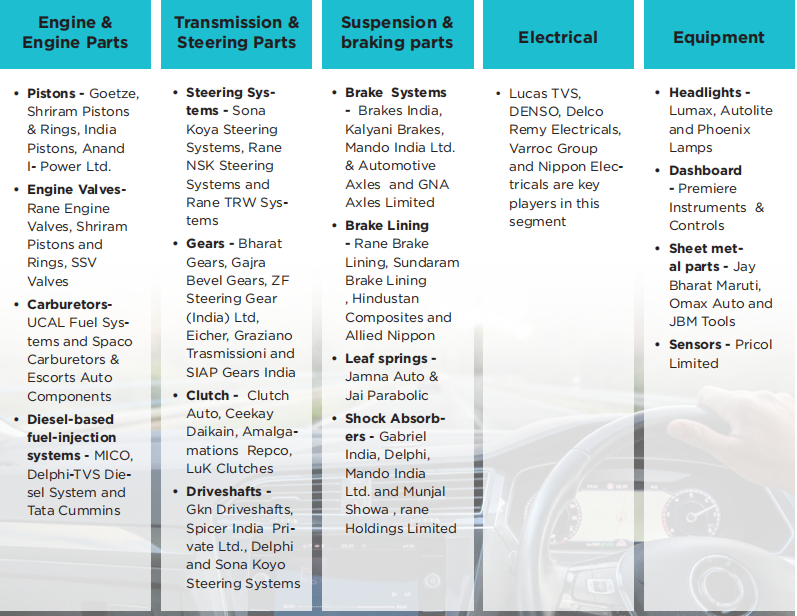
IV. MAJOR PLAYERS BY SEGMENT
V. GOVERNMENT INITIATIVES

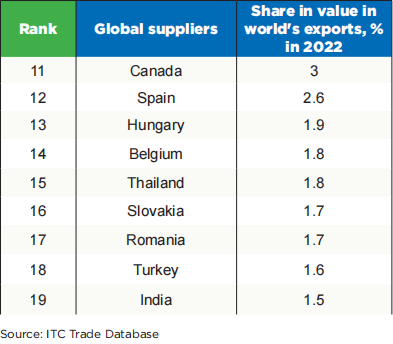
From the above table no.2, we see that India’s ranks as the 17th global supplier of auto components & parts globally which is not a very significant rank, catering 1.6% of the total global supply of auto components & parts.
In order to make a significant mark in the global arena and help India’s automobile sector embark on a road to success, the Govt. has been providing a comprehensive support to the Automobile and Auto Components & Parts sector. The Government of India’s Automotive Mission Plan (AMP) 2006-26 has been instrumental in ensuring growth for the sector. The favourable policy measures aiding growth are as follows:
1. Union Budget 2023-24
- The Government has reaffirmed its commitment towards EVs and its mission for 30% electric mobility by 2030.
- Budget announced customs duty exemption on the import of capital goods and machinery required for the manufacture of lithium-ion batteries that typically power EVs.
- BHEL has successfully manufactured and tested India’s highest rating 500 MVA 400/220/33 kV Auto Transformer, at the National High Power Test Laboratory (NHPTL) at Bina in Madhya Pradesh- a new benchmark in the global transformer industry.
2. National Electric Mobility Mission Plan (NEMMP) 2020
- NEMMP aims to bring the transformational paradigm shift in the Automotive and Transportation industry by promoting hybrid and electrical mobility in India.
• There has been a cumulative outlay of USD 2.15 Bn for building such a roadmap. It is a composite scheme involving demand-side incentives to facilitate the acquisition of hybrid/electric vehicles along with the provision of supply-side incentives.
3. National Automotive Testing and R&D Infrastructure Project (NATRiP)- the largest and most significant initiatives by the Government of India, in the Automobile component industry in India.
- The chief aim of the project is:
» To generate core global competencies - state-ofart testing and R&D infrastructure.(7 R&D centres - Chennai, Manesar, Indore, Raebareli, Silchar,Ahmednagar, Pune)
» To enable seamless integration by driving the automobile component industry in India into global automotive excellence.
- A total of USD 573 Mn investment has been done to adopt and implement global performance standards.
- The key focus lies in providing low-cost manufacturing and product development solutions.
4. Dept. of Heavy Industries & Public Enterprises
- Created a US$ 200 million fund to modernize the auto components industry by providing interest subsidy on loans & investments in newplants & equipment.
- Provided export benefits to intermediate suppliers of auto components against DutyFree Replenishment Certificate (DFRC).
5. Automotive Mission Plan 2016-26 (AMP 2026)
- AMP 2026 targets a fourfold growth in the automobile sector in India, which includes manufacturers of automobiles, auto components & tractors over the next 10 years. The government’s AMP 2016-26 will help the automotive industry grow and will benefit the economy in the following ways:
» The auto industry’s GDP contribution will rise to over 12%.
» Additional ~65 million direct and indirect jobs will be created.
» End-of-life policy will be implemented for old vehicles.
6. FAME Scheme
- Aimed at incentivising all vehicle segments - two wheelers, three wheelers, four wheelers, LCVs and buses. It covers hybrid & electric technologies like Mild Hybrid, Strong Hybrid, Plug in Hybrid & BatteryElectric Vehicles.
- In March 2023, centre approved US$ 97.85 million for 7,432 public fast charging stations under the FAME Scheme Phase II.
- In February 2019, the Government of India approved FAME-II scheme with a fund requirement of US$ 1.39 billion for FY20-22.
- Department of Heavy Industries has sanctioned 2,636 charging stations in 62cities across 24 States/UTs under FAME II.
7. Production-Linked Incentive (PLI) Scheme in the Automobile andAuto Components (2021):
- Outlay of USD 3.5 Bn for the automobile sector proposes financial incentives of up to 18% to boost domestic manufacturing of advanced automotive technology products andattract investments in the automotive manufacturing value chain.
8. Production Linked Incentive (PLI) Scheme for Advanced Chemistry Cell (ACC) Battery Storage (2021):
- Aims at achieving manufacturing capacity of 50 GWh of ACC for enhancing India’s manufacturing capabilities with a budgetary outlay of USD 2.3 Bn. This scheme was oversubscribed by 2.6 times (130 gwh).
9. FDI Policy
- 100% Foreign Direct Investment (FDI) is allowed under the automatic route in the Automobile component industry in India, subject to all the applicable regulations and laws.
10. Vehicle Scrappage Policy:
- The Vehicle Scrappage Policy, launched on August 13, 2021, is a government-funded programme to replace old vehicles with modern & new vehicles on Indian roads. The policy is expected to reduce pollution, create job opportunities and boost demand for new vehicles.
11. Battery Waste Management Policy :
- The Battery waste management rule, published in August 2022 is a government programme to help reduce the dependency on new raw materials. The policy is expected to save natural resources, create new business & job opportunities.
12. State Incentives:
- Apart from the mentioned, each state in India offers additional incentives for industrial projects. Incentives are in areas like subsidized land cost, relaxation in stamp duty exemption on sale and lease of land, power tariff incentives, concessional rate of interest on loans, investment subsidies, tax incentives, backward areas subsidies and special incentive packages for mega projects. Few examples are: Andhra Pradesh, Gujarat and Jharkhand.
VI. GROWTH DRIVERS
A. Demand-Side Drivers
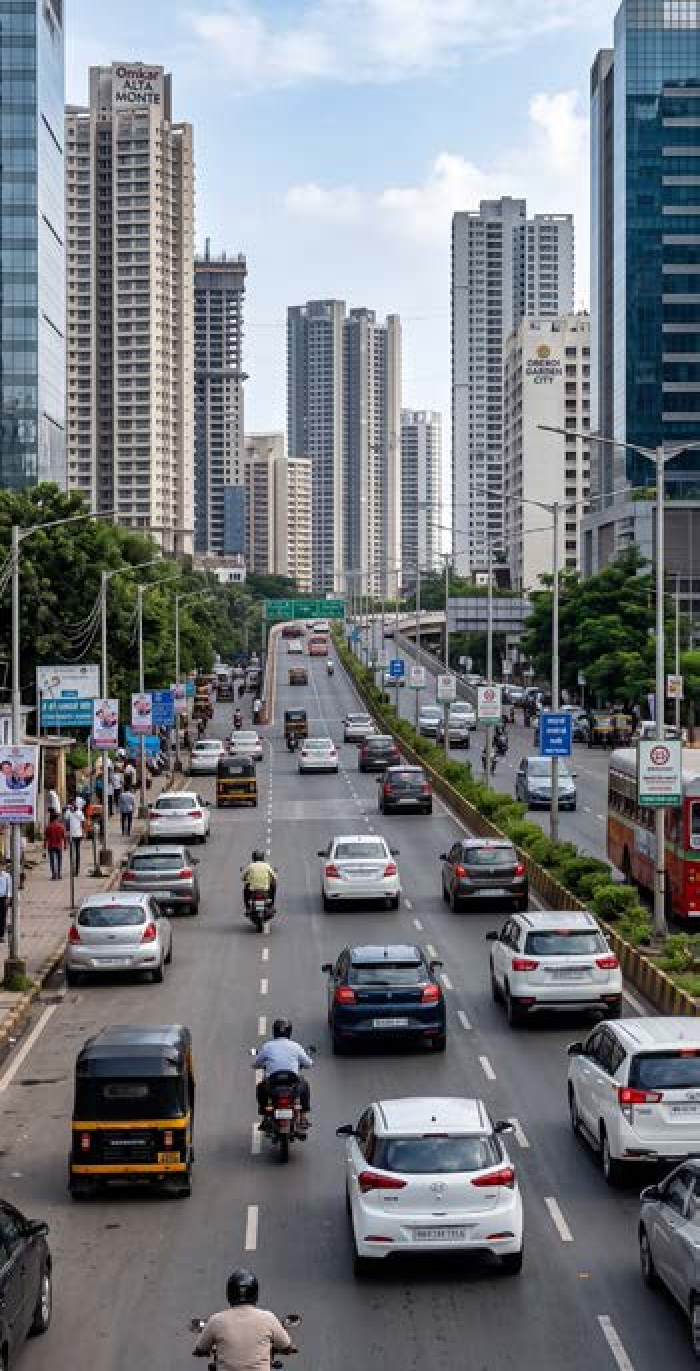
- Growing working population and expanding middle class are expected to remain the key demand drivers. India is the fifth-largest automobile market globally.
- Increase in investment in road infrastructure
- With the Self-Reliant India mission, the auto industry is looking to half its Rs. 1 trillion (US$ 13.6 billion) worth of auto component imports over the next 4-5 years. This will provide significant opportunities for existing and new auto components players to scale up.
B. Supply-Side Drivers
- A cost-effective manufacturing base keeps costs lower by 10-25% relative to operations in Europe and Latin America.
- Second-largest steel producer globally, hence a cost advantage.
- India has a competitive advantage in auto components categories such as shafts, bearings and fasteners due to large number of players. This factor is likely to result in higher exports in coming years.
- India is emerging as a global auto component sourcing hub due to its proximity to key automotive markets such as ASEAN, Europe, Japan and Korea.
- Technological shift and focus on R&D- India retained the 40th position in Global Innovation Index among the top innovative economies globally as per Global Innovation Index (GII) 2023
C. POLICY SUPPORT
- Visionary Govt. policies: Policies such as Automotive Mission Plan 2016-26, Faster Adoption & Manufacturing of Electric Hybrid Vehicles (FAME, April 2015) and NMEM 2020 are likely to infuse growth in the auto component sector of the country are likely to infuse growth in the auto component sector of the country.
- PLI schemes has been extended to the automobile sector with an aim of creating an incremental output of Rs. 2,31,500 crore (US$ 31.08 billion).
- The Government announced National Mission on Transformative Mobility and Battery Storage based on phased manufacturing program (PMP) until 2024.
- Lower excise duty on specific parts of hybrid vehicles
- Establishing special auto parks & virtual SEZs for auto components
VII. INVESTMENT OPPORTUNITIES IN ENGINEERING PRODUCTS
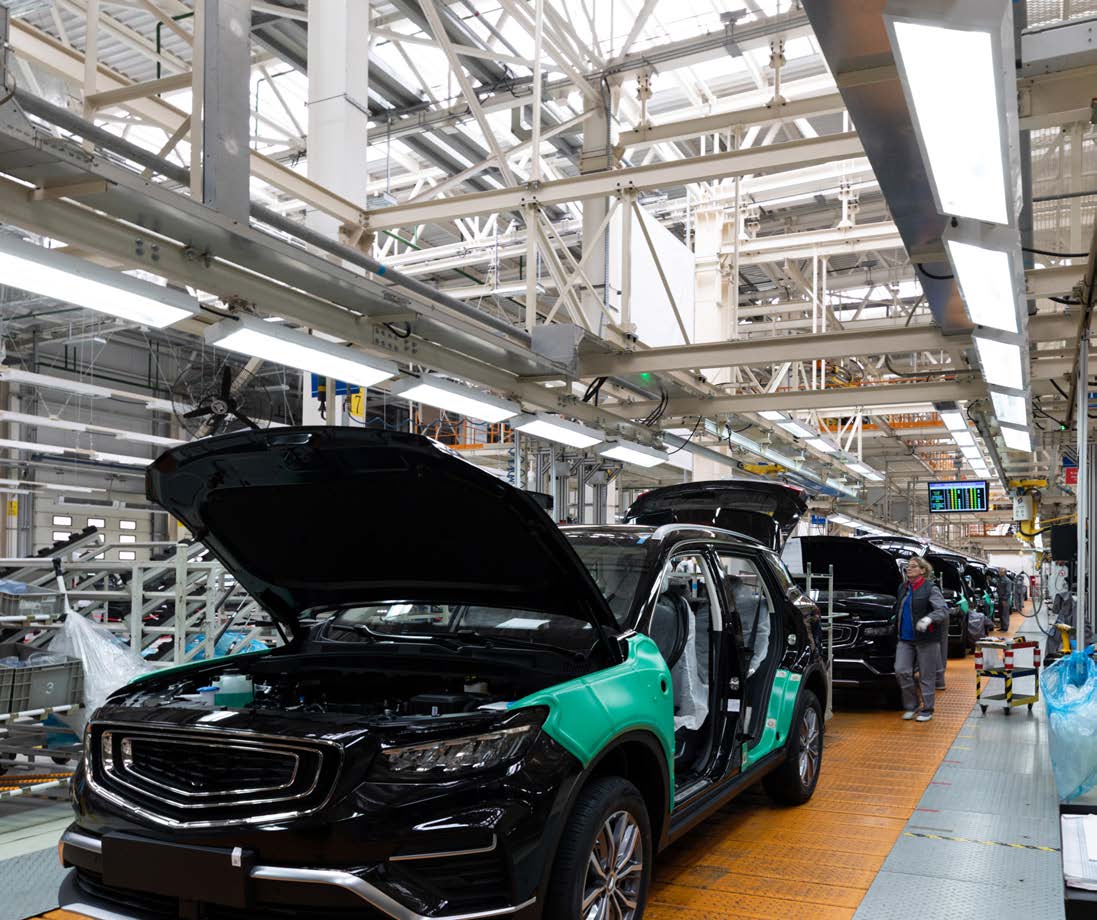
The Indian automobile sector received a cumulative equity FDI inflow of about US$ 36.268 billion between April 2000 - arch 2024. As per Economic Survey 2023-24, the production linked incentive scheme (PLI) for automobile and auto components has so far attracted a proposed investment of Rs. 67,690 crore (US$ 8.18 billion).With the launch of the “Make in India” initiative, the Government is expected to vitalise substantial investment in the auto componentssector.
Some of the Government Support in infrastructure and investment are mentioned below:
Under Electric Mobility Promotion Scheme 2024 government aims to support 3,72,215 EVs including e-2W (3,33,387) and e-3W (38,828 including 13,590 rickshaws & ecarts and 25,238 e-3W in L5 category).
Under phase-II of FAME India Scheme, subsidy amounting to US$ 696.8 million (Rs. 5790 crores) has been awarded to EV manufacturers on sale of 13,41,459 number of electric vehicles till January 31, 2024.
Ola Electric IPO to be the first auto company in India to launch an IPO in over two decades (20 years). It has an expected size of Rs. 8,500 crore (US$ 1.01
In March 2023, the Central Government sanctions Rs. 800 crore (US$ 72.41 million) under FAME India Scheme Phase II to Indian Oil (IOCL), Bharat Petroleum (BPCL), and Hindustan Petroleum (HPCL), for setting up 7,432 public fast charging stations across the country.(Source IBEF Reports)
The new opportunities in the sector are as follows:
- New technological changes in Engine & Exhaust partsinclude introduction ofturbochargers and common rail systems.
- The trend of outsourcing may gain traction in this segment in the short to medium term.
- Share of replacement market in subsegments such as clutches is likely togrow due to rising traffic density.
- The entry of global players is expected to intensify competition in subsegments such as gears & clutches.
- Suspension & braking parts segment is estimated to witness high replacement demand with players maintaining a diversified customer base in thereplacement & OEM segments besides the export market.
- The entry of global players is likely to intensify competition insub-segments such as shock absorbers.
- Metal part manufacturers are likely to benefit from rising demand for body & chassis, pressure die castings, sheet metal parts, fan belts, and hydraulic pneumatic instruments, primarily in the two wheelers industry.
- Prominent companies in this business are constantly working towardsexpanding their customer base.
- In October 2021, Sona BLW Precision Forgings Limited, through its wholly owned subsidiary company, Sona Comstar eDrive Private Limited (Sona Comstar), entered a collaboration agreement with IRP Nexus Group Ltd., Israel, to develop, manufacture and supply magnet-less drive motors and matching controller systems for electric twoand three-wheelers.
VIII. India is poised to emerge as an outsourcing hub

- In March 2024, Tata Motors Group has signed a facilitation Memorandum of Understanding (MoU) with the Government of Tamil Nadu to explore setting-up of a vehicle manufacturing facility in the state. The MoU envisages an investment of Rs. 9,000 crores (US$ 1,081.6 million) over 5-year.
- Tata Motors, in April 2024, announced the inauguration of a new commercial vehicle spare parts warehouse in Guwahati.
- In December 2023, Tata Passenger Electric Mobility Ltd. (TPEM) and Bharat Petroleum Corporation Limited (BPCL) signed an MoU to jointly establish 7,000 public charging stations nationwide to enhance customer satisfaction
- In April 2024, Maruti Suzuki India Limited, commissioned another vehicle assembly line at its Manesar facility.
- In January 2024, at the Vibrant Gujarat Global Summit, Maruti Suzuki announced the investment plans in Gujarat with a New Greenfield plant and a fourth line in SMG.
- In December 2023, Maruti Suzuki India Limited entered into an agreement with the Government of Haryana to establish the second Japan-India Institute for Manufacturing (JIM) as part of its corporate social responsibility (CSR) initiative. The company will invest Rs. 5.8 crore (US$ 698 thousand) to upgrade the existing ITI Kansala into a JIM.
- In May 2023, Maruti Suzuki India plans to invest over US$ 5.5 billion to double capacity by 2030.
- The Renault-Nissan alliance is stepping up its investments in India plans to invest US$ 600700 million at its Chennai-based facility to step up platform localisation and improve sophistication levels in manufacturing.
- In July 2023, Renault Nissan to invest Rs. 1.4 crore (US$ 1,68,762.86 ) to upgrade infrastructure at eight schools near Chennai.
- In February 2023, Nissan and Renault plan to invest US$ 600 million in India over the next 3-5 years to expand their market share in passenger cars and electric vehicles.
- In July 2021, Nissan initiated a feasibility study to manufacture electric vehicles in India. If the study is positive when it is concluded in a year, Nissan may end up producing EVs in India for local sales and exports.
- In February 2024, company has announced it will invest over Rs. 32,000 crore (US$ 3.85 billion) from 2023 to 2033 in expanding its EV range and enhancing its current car and SUV platforms.
- In January 2024, Hyundai Motor India Limited announced Rs. 6,180 crore (US$ 743.8 million) investment plans in the state of Tamil Nadu including Rs. 180 crore (US$ 21.7 million) towards a dedicated ‘Hydrogen Valley Innovation Hub,’ in association with IIT- Madras.
- In January 2024, Hyundai Motor India Ltd. finalized the acquisition and transfer of specified assets at General Motors India’s Talegaon Plant in Maharashtra and inked an MoU with the Government of Maharashtra committing to an investment of Rs. 6,000 crore (US$ 722 million) in the state.
- In May 2023, Hyundai Motor announced that it will invest over Rs. 20,000 crore (US$ 2.41 billion) in Tamil Nadu over the next 10 years to bolster its EV production.

Conclusion
India’s automobile industry has been propelled forward by a growing consumer class, improved ease of doing business, expanding infrastructure, and other favorable factors. Over the years, the industry has undergone a paradigm shift, creating new verticals and opportunities for auto component manufacturers. The future of the auto OEM and auto component industry is being shaped by multiple trends, policies, and disruptions. Keeping pace with these changes, India’s auto component industry has been flourishing. The Indian automotive OEM industry is already in a strong position and is at the forefront of many segments globally. However, despite its impressive achievements, its share in global exports remains modest. Therefore, it is crucial for each auto component player to aggressively pursue export opportunities that are most suited to them. Significant opportunities lie ahead, driven by India’s expected strong economic progress. Auto component manufacturers need to capitalize on these opportunities to leap forward and achieve global eminence.
India Pavilion At AUTOMECHANIKA FRANKFURT 2026
FRANKFURT, GERMANY | 8 – 12 SEPTEMBER, 2026
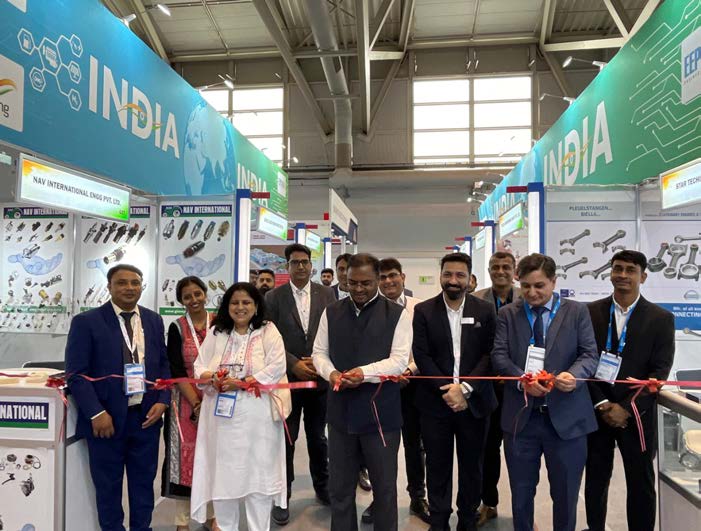
Automechanika Frankfurt 2026 will be held from 8–12 September 2026 at Messe Frankfurt, Germany. It is widely recognised as the world’s leading trade fair for the automotive aftermarket and service industry, bringing together manufacturers, distributors, service providers, and industry professionals from across the globe.
Organised biennially by Messe Frankfurt, the exhibition serves as a global platform for innovations, technology exchange, and business networking in the automotive aftermarket sector. The event showcases the latest developments in automotive parts, workshop equipment, digital mobility solutions, vehicle maintenance technologies, and service innovations.
Automechanika Frankfurt attracts key stakeholders from the automotive ecosystem including OEM suppliers, component manufacturers, workshop operators, distributors, and mobility solution providers, making it an important meeting point for global industry leaders and trade buyers.
Highlights of Automechanika Frankfurt 2024
- 108000 Visitors
- 4200+ Exhibiting Companies
- 80 Exhibiting Countries
- 320,000 sqm Exhibition Area
Frankfurt
Frankfurt am Main,[a] usually shortened to Frankfurt, is the most populous city in the German state of Hesse. Its 778,589 inhabitants as of 2025[8] make it the fifth-most populous city in Germany.[b] Located in the foreland of the Taunus on its namesake river Main, the city forms a continuous conurbation with Offenbach am Main; its urban area has a population of more than 2.7 million. Frankfurt is the heart of the larger RhineMain metropolitan region, which has a population of more than
5.8 million and is Germany’s second-largest metropolitan region after the Rhine-Ruhr region. Home to the European Central Bank, the city serves as one of the four institutional seats of the European Union (alongside Brussels, Luxembourg and Strasbourg). Frankfurt is classified by the GaWC as an Alpha-rated world city.
Frankfurt was first mentioned in a document in 794 and has been an imperial city since 1372. Frankfurt was a city state, the Free City of Frankfurt, for nearly five centuries, and was one of the most important cities of the Holy Roman Empire, as a site of Imperial coronations; it lost its sovereignty upon the collapse of the empire in 1806, regained it in 1815 and then lost it again in 1866, when it was annexed by the Kingdom of Prussia following the Austro-Prussian War. It has been part of the state of Hesse since 1945. Frankfurt is culturally, ethnically and religiously diverse, with half of its population, and a majority of its young people, having a migrant background. A quarter of the population consists of foreign nationals, including many expatriates. In 2015, Frankfurt was home to 1,909 ultra high-net-worth individuals, the sixth-highest number of any city.
Frankfurt is a global hub for commerce, culture, education, tourism and transportation, and is the site of many global and European corporate headquarters. Due to its central location in former West Germany, Frankfurt Airport became the busiest in Germany, one of the busiest in the world, the airport with the most direct routes in the world, and the primary hub for Lufthansa, the national airline of Germany and Europe’s largest airline. Frankfurt Central Station is Germany’s second-busiest railway station after Hamburg Hbf, operated by Deutsche Bahn, the world’s largest railway company,[9] whose Frankfurter division DB InfraGO manages the largest railway network in Europe.[10] Frankfurter Kreuz is the most-heavily used interchange in the EU. Frankfurt is one of the major financial and business centers of Europe, with the headquarters of the European Central Bank, Deutsche Bundesbank, Frankfurt Stock Exchange, Deutsche Bank, DZ Bank, KfW, Commerzbank, DekaBank, Helaba, several cloud and fintech startups, and other institutes. Automotive, technology and research, services, consulting, media and creative industries complement the economic base. Frankfurt’s DE-CIX is the world’s largest internet exchange point. Messe Frankfurt is one of the world’s largest trade fairs. Other major fairs include the Music Fair and the Frankfurt Book Fair, the world’s largest book fair. The city also has 93 consulates, among which the largest is the US Consulate General.
Frankfurt is home to influential educational institutions, including the Goethe University with the Universitätsklinikum Frankfurt [de] (Hesse’s largest hospital), the FUAS, the FUMPA, and graduate schools like the FSFM. The city is one of two seats of the German National Library (alongside Leipzig), the largest library in the German-speaking countries and one of the largest in the world. Its renowned cultural venues include the concert hall Alte Oper, continental Europe’s largest English theater and many museums, including the Städel, Liebieghaus, German Film Museum, Senckenberg Natural Museum, Goethe House and Schirn art venue. Frankfurt’s skyline is shaped by some of Europe’s tallest skyscrapers, which has led to the term Mainhattan.
The city has many parks and major botanical gardens. Roughly 52 percent of the city area is green. Frankfurt is a founding member of the Climate Alliance of European Cities and has pledged to work towards a 50 percent reduction of carbon emissions by 2030.[11] Frankfurt is the seat of the German Football Association, is home to the first division association football club Eintracht Frankfurt, the Löwen Frankfurt ice hockey team, and the basketball club Frankfurt Skyliners, and is the venue of the Frankfurt Marathon and the Ironman Germany.
Economic & Commercial Relations
The EU-India Free Trade Agreement was concluded on 27 January 2026, at the 16th India–EU Summit, marking a historic milestone in India–EU economic relations and trade engagement. India, under the agreement, has secured unprecedented market access for more than 99% of Indian exports by trade value to the EU, and also comprehensively covers trade in services, trade remedies, rules of origin, social security arrangements, mobility framework for skilled professionals, as well as emerging areas such as SMEs and digital trade, amongst others. The FTA received broad support across Germany’s political spectrum and business community for several reasons. First, it excludes sensitive agricultural products, which helped secure French backing and avoided the protests that faced the Mercosur deal. Second, the rising American protectionism under Trump seemingly created urgency to complete the negotiations. Third, the deal aligns with Germany’s goal to diversify supply chains away from China. German export-oriented industries, especially automotive and mechanical engineering, see India as an important new market. The agreement signifies Germany’s effort to adapt to a changing global trade environment with multiple trading partners rather than dependence on single markets like China or the United States.
Trade
Germany was the 8th largest trading partner for India in 2024-25. Germany is India’s largest trading partner in EU. India constituted about 1% of Germany’s total 10 / 21 foreign trade in 2025 and Germany constituted over 2.37 % of India’s foreign trade in 2024-25 (2.29% in 2023-24 and 2.24% in 202223). While the balance of trade has been in favour of Germany, bilateral trade has experienced continuous growth over the last few years. Total bilateral trade in FY2024-25, goods and services combined reached US$ 51.23 bn.
Bilateral trade in goods and services has touched an all-time high of US$ 52.13 billion in 2025. As per Destatis, Bilateral trade in goods stood at an all-time high of US$ 35.37 billion in 2025, with exports from India at US$ 16.95 billion, and imports to India from Germany at US$ 18.43 billion. India was Germany’s 22nd largest trading partner in 2024. Germany accounts for roughly one-fourth of India’s trade with the European Union, reinforcing its position as India’s leading EU trading partner. During the period April – December 2025, bilateral trade in goods increased by 3.36% compared to the same period in 2024, reaching US$ 26.83 billion. During this period, Indian exports to Germany reached US$ 12.78 billion, marking an increase of 11.02%, while Indian imports from Germany stood at US$ 15.05 billion, reflecting a decline of 2.75% compared to the same period in 2024.
As per figures from Bundesbank, bilateral trade in services reached US$ 16.76 billion in 2025. Indian services exports to Germany were US$ 10.36 billion and Indian services imports from Germany were US$ 6.40 billion. During April – December 2025, bilateral trade in services stood at US$ 12.59 billion (-5.48%). In this period, Indian services exports to Germany were US$ 7.83 billion (-8.82%) and Indian imports were US$ 4.76 billion (-3.37%).
Major Indian exports to Germany include machinery, clothing, chemical products, pharmaceutical products, coal and petroleum products, steel and other metals, data processing equipment, electrical and optical products, leather and leather products, electrical equipment, and textiles. Germany is an export-led economy and major exports to India include machinery, vehicles and parts, chemical products, data processing equipment, electrical and optical products, electrical equipment, metals and metal products; collection, treatment and disposal of waste and recyclables, rubber and plastic products, and pharmaceutical products.
Investment
48. Germany is the 10th largest foreign direct investor in India with a cumulative FDI in India of US$ 15.50 billion from April 2000 to December 2025. German investments in India in FY 2024-25 were US$ 469 million. (US$ 505 in 2023-24 and US$ 547 million. in FY 2022-23).
While consistent, these inflows fall short of the potential between the two major economies. Based on Mission’s research, German companies announced fresh investment commitments exceeding US$ 6.91 billion since 2024 across sectors like automotive, chemicals, manufacturing and services. As per the Indo-German Chamber of Commerce, there are more than 2000 German companies active in India. German investments in India have been mainly in transportation, electrical equipment, 11 / 21
metallurgical industries, services sector (particularly insurance), chemicals, construction activity, trading and automobiles. Most major German companies including the automobile and machinery giants are present in India. India offers significant prospects for cooperation with Germany, including in the areas of infrastructure, energy, and environmental and high technology.
49. German Mittelstand (SME) companies, comprising over 90% of the German manufacturing sector, are known as the backbone of the German economy. There has been a targeted effort to attract the Mittelstand’s investment to India through the Embassy’s Make in India Mittelstand (MIIM) Program. The MIIM is a Market Entry Support Programme for German Mittelstand companies, being implemented by the Embassy of India since September 2015 to support high-potential Mittelstand companies with medium to longterm potential for manufacturing in India. The programme is currently facilitating 262 German member companies with their investments in India, covering a total declared investment volume of US$ 2.3 billion. Many of these companies (over 30) are hidden champions, which are global market leaders in niche products/technologies.
50. Indian investments in Germany have shown an increase in the last few years. Besides trading, Indian companies are setting up value chain activities in Germany, manufacturing goods and services locally as well as engaging in R&D and innovation activities. More than 215 Indian companies are operating in Germany. Sectors such as IT, automotive, pharma, biotech and manufacturing have received a major portion of Indian investments.
India Pavilion At AUTOMECHANIKA DUBAI 2026
DUBAI, UAE | 10 – 12 NOVEMBER 2026
Automechanika Dubai is recognized as the largest international trade exhibition for the automotive aftermarket industry in the Middle East, Africa and adjoining markets, serving as a strategic gateway to the GCC, Middle East, Africa, Central Asia and CIS regions. The exhibition offers unparalleled opportunities for manufacturers, exporters, distributors and service providers to connect with key buyers, importers, wholesalers, fleet operators and industry decision-makers from across the globe.
Automechanika Dubai covers the entire automotive aftermarket value chain and has established itself as the premier sourcing, networking and business development platform for the automotive industry across the Middle East and Africa. The exhibition attracts automotive parts manufacturers, distributors, dealers, garage owners, fleet operators, retailers, importers, exporters and procurement professionals seeking innovative products and solutions.
Dubai’s strategic geographic location and logistics connectivity make it an ideal business hub for companies targeting these high-growth markets.
On Dubai
Dubai is the most populous city in the United Arab Emirates and the capital of the Emirate of Dubai. It is on a creek on the southeastern coast of the Persian Gulf. As of 2025, its population stands at 4 million, 92% o
© Copyright , All rights reserved. Design by Andreal