







VOL. 17, ISSUE NO. 11 | February 2025

Spotlight





Exporters in the engineering sector are facing significant challenges due to the imple mentation of the Quality Control Order (QCO), issues with obtaining BIS certification, and delays in se curing Non-Objection Certificates (NoCs) from the Steel Ministry. While the QCO aims to curb infe rior imports, it has created hurdles for export-oriented manufacturers dependent on critical inputs like steel. A major issue with BIS certification is that foreign suppliers, especially for small-quantity orders, are often unwilling to register with BIS. This poses a significant challenge for importing products not manufactured domestically, disrupting supply chains and increasing costs. Additionally, delays in obtaining NoCs further impact production schedules and the timely fulfilment of export commitments. These issues are hampering India’s engineering export competitiveness and require urgent streamlin ing and intervention.
DEPENDENCE ON IMPORTED INPUTS
The engineering industry in India often relies on imported raw materials due to the following key reasons:
• Cost Competitiveness: Imported raw materials are sometimes priced more competitively than their domestic counterparts, making them a preferred choice for manufacturers striving to remain cost-efficient in a highly competitive export market.
• Supply Constraints: Domestic demand for certain raw materials often outstrips supply, leading to shortages that necessi tate reliance on imports to meet production schedules
• Non-availability in India: There are instances where specific raw materials required for manufacturing high-quality engineering products are not produced domestically, leaving no alternative but to source these inputs internationally
CHALLENGES ARISING FROM QCO, BIS CERTIFICATION, AND NOC DELAYS
While QCO ensures quality control, its implementation has inadvertently created obstacles for some of the export-driven engineering industry. Some manufacturers report difficulties in importing essential raw materials or intermediate goods due to stringent compliance requirements under QCO. This disrupts their production cycles and delays order fulfilment.
Steel is a critical raw material for most engineering products, accounting for approximately 60% of the production cost in many cases.QCO regulations on steel and related products have had a cascading effect on the cost and availability of these inputs, directly affecting the competitiveness of Indian engineering exports.
The Non-Objection Certificate (NOC) mechanism under the Quality Control Order (QCO) was introduced to facilitate critical imports, particularly for inputs not readily available domestically, ensuring that export-oriented manufacturers can access essential raw materials. However, delays in NOC processing, lack of clarity in pro-cedures, and instances of non-is suance have created significant challenges for the industry. Many manufacturers face production disruptions and increased costs due to the unavailability of timely NOCs, directly impacting their abil ity to meet export commitments. Streamlining the NOC process, enhancing transparency, and establishing a dedicated support mechanism for export-driven industries are crucial to mitigating these is sues and safeguarding India’s engineering export competitiveness
SURVEY INSIGHTS
To better understand the challenges posed by the implementation of the Quality Control Order (QCO), issues with BIS certification, and delays or unavailability of Non-Objection Certificates (NoCs) on engineering exports, EEPC India conducted a survey among its members. The objective was to assess how these regulatory measures are affecting exporters, particularly those reliant on imported inputs critical for manufacturing export products. The survey aimed to capture real-time insights into the impact on production schedules, costs, and overall competitiveness in global markets.
Key findings include:• Cold rolled steel strip in coil c80m 1.55 mm / 1.63mm (HS 72112950)
Issue: As per members, this is a major component for production of bearing cage and stamp components. Since there is shortage of this type in the domestic market there is import dependency. The QCO for this product has not been cleared since October 2024 which is delaying their shipment.
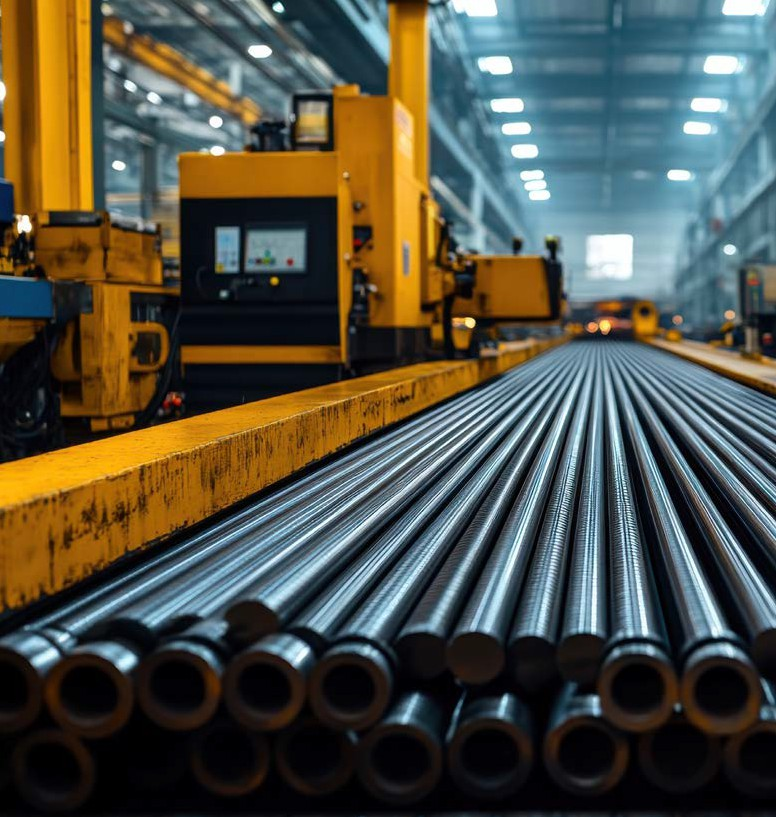
•All Tool & Alloy Steels: Solid Round Bars of diameters 300mm up to 650mm as well as Flat bars in various sizes
Issue: As per exporters these alloy steel grades (AISI H13, AISI D2, AISI H13, etc.) are used in the manufacturing of industrial clades, knives and cutters. These fall un- der IS 3748 in the QCO for steel and steel products. There are no bulk manufacturers of all grades of Alloy Tool Steel under IS 3748 in In- dia in all sizes/sections hence there is import dependency. However, in recent times the QCO for these products have not been cleared and manufacturers/ exporters are unable to source it which is delay- ing their domestic as well as export orders. Members have even men- tioned that many of their buyers are diverting their orders to other countries especially China Apart from difficulty in getting QCO clearance, there are some cases where the Government is frequently changing rules for appli- cation of No Objection Certificates (NOCs) for QCO without informing the exporters.
One such issue is given below: •Rubber Coated Steel (HS 72125090)Issue: There is significant import dependency for this kind of steel due to insufficient availability in the Indian market. While previously the NOC had to be applied at
Needs to be imported from Italy as the Indian manufacturers are unable to fulfil the specific quality requirement. Despite applying for NOC, it has remained pending as the supplier does not have BIS reg- istration.
•Triply CirclesThis is produced in various thick- ness and is a relatively new innova- tive raw material for manufacturing cookware (for both domestic mar- ket and export). Since the import volume is not significant, indige- nous manufacturers do not want to set up domestic factories. However, Ministry of Steel has stopped issu- ance of NOC which may impact the domestic as well as export supply.
•Hardened & Tempered Flapper Valve SteelOne of our members states that despite ongoing discussions with BIS authorities since 2017, they have yet to receive the necessary Indian Standards for Flapper Valve Steel. They have been operating under a clarification NOC from the Ministry of Steel, which has abrupt- ly ceased. Due to the non-issuance of NOC, the member has incurred demurrage and storage charges amounting to Rs. 25 lakhs so far. Due to delay in delivery customers are switching from Indian suppliers to others. Also, since they are not being able to even import sample steel shipments, new innovations and projects are on hold.
The member also highlighted that they are facing discrepancies in the treatment of similar steel grades. While steel grades from Japan with identical chemical and mechanical properties is marked as “out of pur- view”, the same grade is allowed to be imported from Sweden.
The member who has been import- ing the raw material with NOCs till now suddenly faced issue due to recent Ministry of Steel notifica- tion and non-issuance of NOC. The member mentioned that they need support for at least next 6 months to complete their hydel power project.
• Steel material imported from JapanThe member is a regular importer of steel raw materials from Japan with NOCs. With more than 15 ship- ments in transit, they need to file over 50 applications for NOC ap- proval before shipment arrival for customs clearance. The delay in NOC approval is preventing them from filing the Bill of Entry. Another member also mentioned that NOCs have been pending for their applications submitted since 14.11.2024. As in the previous case, they are also unable to fill the Bill of Entry in absence of NOC certificate
Incoloy 840 alloy tubes:One of our members import Incoloy One of our members import Incoloy 840 alloy tubes from China as nick- el Alloy (HS code 75071200). This HSN code does not require BIS cer- tification. However, the Customs in the Nhava Sheva has put the prod- ucts under the HS code 7306400, a product of regular steel alloy which requires BIS certification. The member has not received any update zon NOC application, there- by causing delay in clearance of goods.
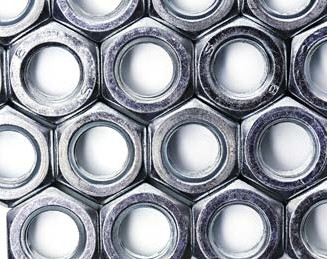
•Nuts of Stainless SteelOne of our members stated that their items of import consist of “Nuts of stainless steel” which fall under Sr. No 1364 – Part 3, which does not come under the list of im- ported items with compulsory BIS certification as per S.O. No. 3267 (E) which was published in the “The Gazette of India” on 21st July 2023. The items which need man- datory BIS certification are listed under 1364-Part-1: is for Hexagon head Stainless Steel Bolts, 1364-Part-2: is for Hexagon head Stainless Steel Screws Despite this, their import consign- ment has been held by the Cus- toms Authority in the Nhava Sheva Port stating that the item of import requires mandatory BIS certificate.
Apart from Steel, similar issues also arise while importing other raw materials.
Some cases are given below:
•Marine Aluminium plates (HS 76061200)The member requires to import Marine Aluminium Plates of Grade 5083 for which requires BIS certifi- cate by April 2025. However, since the import amount is not signifi- cant, the overseas manufacturers are not ready to register with BIS as their registration cost far ex- ceeds their profit margins.

One of our members who is the exporter of Turbochargers men- tioned that while they welcome the QCOs, the stipulated timelines for adhering to these requirements are challenging to implement given automotive launch standards. They have requested for extension of lead time for Aluminum and Grey Iron Castings to at least 15 months to adhere the development require- ments of automotive launches.
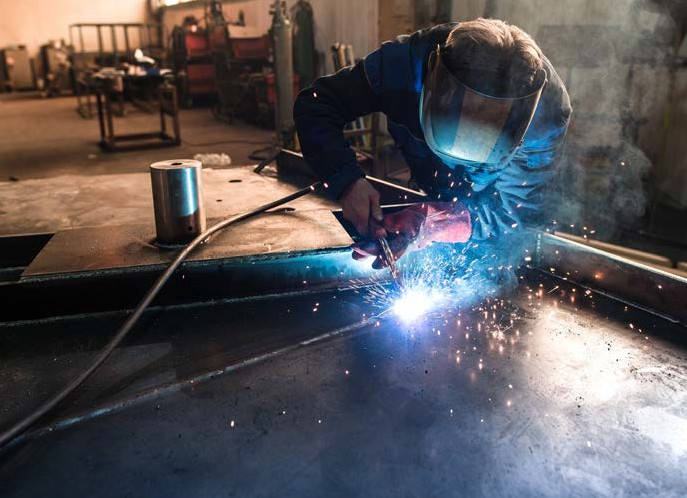 •Aluminum and Grey Iron Castings
One of our members who is the exporter of Turbochargers men- tioned that while they welcome the QCOs, the stipulated timelines for adhering to these requirements are challenging to implement given automotive launch standards. They have requested for extension of lead time for Aluminum and Grey Iron Castings to at least 15 months to adhere the development require- ments of automotive launches.
•Copper Alloy namely, Zirconium Copper, Chromium Zirconium Copper, Nickel Silicon Chromium Copper & Beryllium Copper for manufacture of Spot & Seam Welding Electrodes for Resistance WeldingWhile the above-mentioned cop- per alloys used for manufacture of Spot & Seam Welding Electrodes for Resistance Welding are covered under IS 8365.1991 which is not in- cluded in the mandatory Copper QCO. However, one of our mem- bers mentioned that their import- ed consignments got stuck at the customs claiming that the import- ed goods can be used for manu- facture of products covered under the mandatory list of Copper QCO. The company had to make lengthy correspondence with the Customs department to convince them that these alloys are only used for man-ufacture of Spot & Seam Welding Electrodes for Resistance Weld- ing and are not covered under the mandatory Copper QCO for releas- ing the consignment. However, re- peat of such issues can affect ease of doing business for the manufac- turer/ exporter
In these cases, members men- tioned that the time taken to issue is BIS Foreign Manufacturing Cer- tificate (FMCS) under the manda- tory copper QCO is significantly high and exceeds the time given for submission of BIS certificates for imports. These products are important for several industries in- cluding air-condition and refriger- ation industries and the significant time taken to process the FMCS certificate affects the ease of do- ing business for the user industries.


© Copyright , All rights reserved. Design by Andreal