







VOL. 19, ISSUE NO. 7 | October 2026

Spotlight





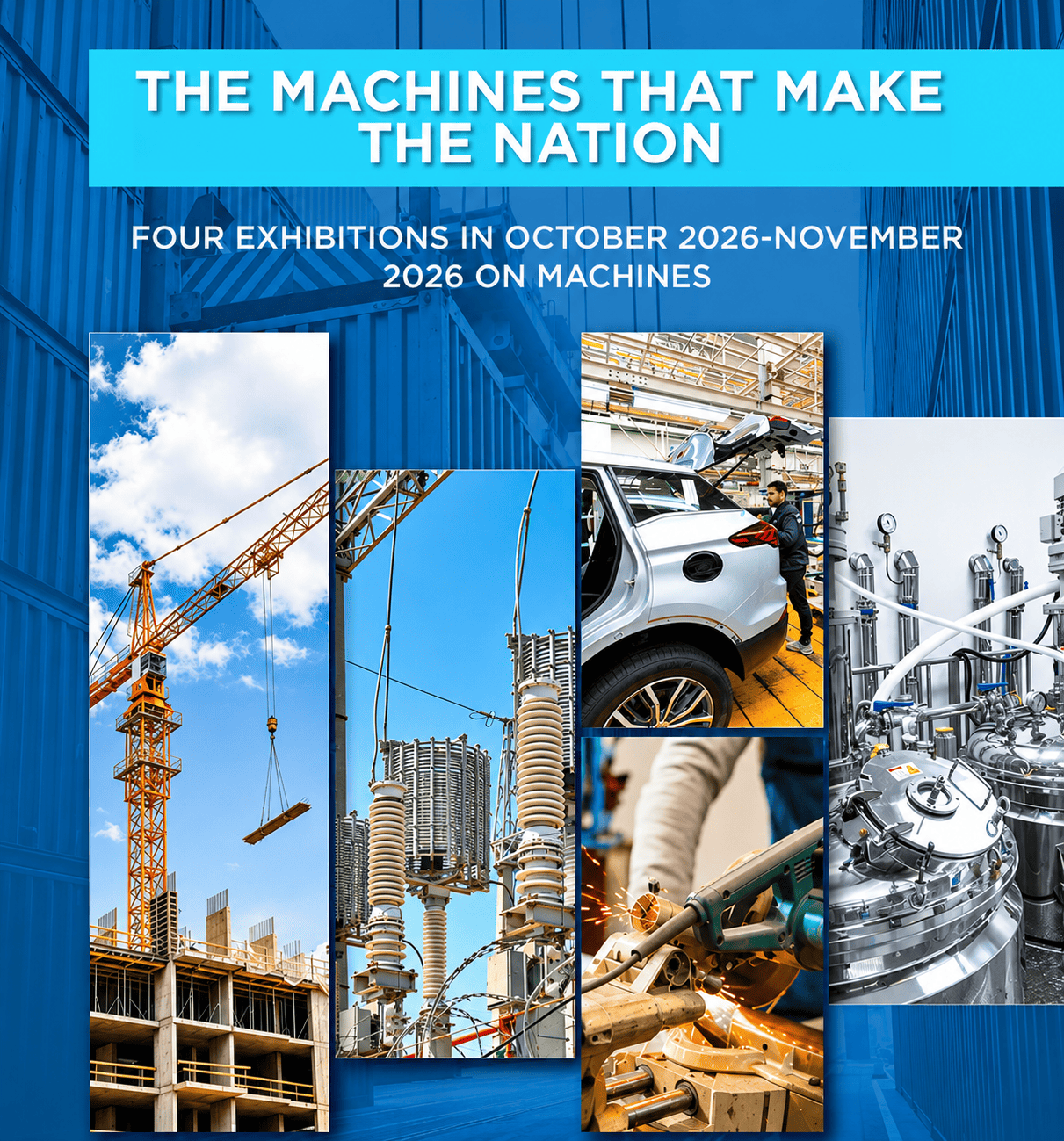
Capital goods—comprising plant, machinery, and equipment used across manufacturing and services— enable capacity creation across industries. From metro systems and renewable energy parks to automotive plants and electronics manufacturing units, heavy engineering capabilities ultimately determine the scale, productivity, and technological depth of industrial activity.
The sector currently contributes approximately 1.9% to India’s GDP. While this share appears modest, its multiplier effect is significant. A strong domestic capital goods base reduces import dependence, enhances supply chain resilience, and supports higher-value-added manufacturing across the economy.
For decades, India’s growth narrative was driven by services and consumption. That paradigm is now shifting. Today, the story of India’s economic transformation is increasingly written in steel, precision engineering, and industrial capability—positioning capital goods as a strategic pillar of the country’s industrial sovereignty.
Evidence of this shift is visible in industrial indicators. With the Index of Industrial Production (IIP) for capital goods surging by 8.1% in late 2025—perfectly mirroring manufacturing growth. This signals not a temporary spike but the early stages of a structural industrial build-out aligned with India’s ambition to become a global manufacturing hub.
This momentum is also visible in production trends. Sector output has nearly doubled over the past decade, reaching ₹4,29,001 crore in 2023–24. At the same time, Production Linked Incentive (PLI) schemes have attracted over ₹2 lakh crore in realised investments as of September 2025, creating strong upstream demand for advanced machinery, robotics, and specialised engineering systems supplied by the capital goods ecosystem.
Infrastructure-Led Industrial Demand
A key driver of this transformation is the government’s sustained push toward infrastructure-led growth. Public capital outlay has expanded a staggering 4.2 times since FY18, rising from ₹2.63 lakh crore to a proposed ₹12.2 lakh crore in the Union Budget FY 2026–27.
This investment is complemented by large national programmes such as the National Infrastructure Pipeline (NIP), which envisages investments of over ₹111 lakh crore across sectors including energy, transport, urban infrastructure, and logistics.
These initiatives require significant heavy engineering inputs— including industrial machinery, power equipment, material handling systems, construction equipment, and process engineering solutions—creating sustained long-term demand for capital goods manufacturing. While imports of advanced machinery grew by 13.4% in Q3 FY26, this for a strategic investor, represents a “localization map”—a clear signal of exactly where domestic capacity is waiting to be built.
Subsector Opportunities Across the Capital Goods Ecosystem
India’s capital goods sector spans multiple specialised segments, each supported by distinct demand drivers and policy initiatives.
Construction and Infrastructure Equipment (CIE): India is the world’s third-largest market for construction equipment.The Scheme for Enhancement of Construction and Infrastructure Equipment (CIE) aims to strengthen domestic manufacturing of high-value machinery such as tunnelboring systems and advanced hydraulics.
Power and Electrical Equipment: The largest sub-segment of India’s capital goods sector, it is driven by grid modernisation and the country’s 500 GW non-fossil capacity target by 2030. Transformers and transmission equipment have recorded consistent growth, while emerging opportunities lie in grid-scale battery storage and smart grid technologies, where domestic manufacturing capacity remains limited. Recent customs duty exemptions for machinery used in lithium-ion cell manufacturing and critical mineral processing have aligned capital goods with the global EV and renewable storage revolution.
Machine Tools and Precision Engineering: India’s machine tools market stood at US$1.5 billion in 2023 and is projected to reach US$3.2 billion by 2032. Initiatives such as the Tumakuru Machine Tools Park and SAMARTH Industry 4.0 centres are strengthening domestic precision manufacturing capabilities. To move up the value chain, the Ministry of Heavy Industries is also establishing digitally enabled Hi-Tech Tool Rooms.
Process Plant Equipment:
The sector has an estimated manufacturing capacity of around US$6 billion per annum,with Indian firms supplying pressure vessels, heat exchangers, and modular process units to industrial projects worldwide. Increasing integration into global EPC supply chains, particularly across the Middle East and Africa, is expanding opportunities in high-value equipment such as cryogenic systems and specialised pressure vessels.
Battery and EV Manufacturing Equipment: Equipment for lithium-ion cell manufacturing and battery assembly represents one of the fastestgrowing opportunities. The PLI-ACC scheme’s ₹18,100 crore commitment is expected to drive demand for cell manufacturing lines, testing systems, and battery management technologies. Cell manufacturing lines, battery assembly systems and battery management system testing infrastructure barely exist in India today. India's first battery and BMS testing facility, established at ARAI Pune under the Capital Goods Scheme, is the opening move.
Technology transition and Industry 4.0
The sector is also undergoing a technological transformation through the adoption of Industry 4.0 technologies, including automation, digital manufacturing, robotics, and advanced materials.
Indian manufacturers are increasingly integrating smart manufacturing systems, IoT-enabled equipment, and predictive maintenance technologies to improve operational efficiency and productivity.
The Policy Environment: Built for Long-Term Capital
India’s policy framework for capital goods investment is designed to support long-term industrial partnerships. The sector does not require industrial licensing, and 100% FDI is permitted under the automatic route (except for land-border countries). There are no restrictions on royalty payments, technology transfer fees, or design remuneration for foreign collaborators. Machinery—both new and used—can be imported freely, with a maximum basic customs duty of 7.5%, alongside preferential rates under India’s expanding FTA network and Project Imports facility.
A Strategic Opportunity for Global Manufacturers
Global supply chain diversification and India’s expanding domestic market are strengthening the country’s attractiveness as a manufacturing destination.
India offers several structural advantages for capital goods manufacturing:
- A large and expanding domestic market is expected to drive demand for cell manufacturing lines, testing systems, and battery management technologies. Cell manufacturing lines, battery assembly systems and battery management system testing infrastructure barely exist in India today. India’s first battery and BMS testing facility, established at ARAI Pune under the
- Competitive engineering talent and technical workforce.
- Expanding industrial infrastructure.
- Strong policy support for manufacturing and exports.
The top five destinations for engineering goods exports in FY25 were the USA, UAE, Saudi Arabia, Germany and Italy— a geographically and economically diversified buyer base that signals sustained demand well beyond India’s domestic cycle.
India’s policy framework for capital goods investment is designed to support long-term industrial partnerships. The sector does not require industrial licensing, and 100% FDI is permitted under the automatic route (except for land-border countries). For global investors, the opportunity spans the entire value chain—from large-scale OEM manufacturing in construction equipment, power systems, and industrial machinery to precision components, automation solutions, and advanced engineering systems. This is not a short-term investment cycle. It represents a structural industrial build-out supported by infrastructure investment, manufacturing incentives, the energy transition, and expanding global supply chains.
As India enters its next phase of industrialisation, capital goods will play a defining role in shap-ing the country's manufacturing capability, technological depth, and global competitiveness. Heavy engineering is no longer simply an industrial sector-it is the foundation of India's next decade of economic growth.
EEPC India is participating in four Back to Back International Machinery exhibitions in October and November
MSV Brno2026
6 - 9 O C T O B E R 2 0 2 6
About the Exhibition
The International Engineering Fair (MSV) is the premier industrial trade fair in Central Europe and one of the most influential engineering and manufacturing exhibitions in Europe. Organized annually by Veletrhy Brno, the event serves as a major platform for industrial technologies, machinery, automation, manufacturing solutions, and engineering innovations.
Key Advantages
- Gateway to Central and Eastern European markets.
- Strong participation from manufacturing, automotive, machinery and engineering sectors.
- Excellent platform for technology transfer and industrial partnerships.
Key Themes of 67th MSV 2026:
The exhibition will continue to focus on emerging industrial trends including:
- Industry 4.0
- Smart Manufacturing
- Digital Factory
- Artificial Intelligence in Production
- Industrial Automation
- Robotics
- Circular Economy
- Sustainable Manufacturing
- Resource Efficiency
- Green Industrial Technologies
Why Participate?
MSV is regarded as the most important industrial exhibition in Central and Eastern Europe, attracting decision-makers, technology buyers, distributors, manufacturers, OEMs and industrial solution providers from across Europe and beyond.More than 70–80% of visitors are involved in investment and purchasing decisions, making it a highly business-oriented exhibition. Participate in MSV 2026 and explore business opportunities across the Czech Republic, Germany, Austria, Slovakia, Hungary and the wider European Union market.
Highlights of MSV 2025
EXHIBITING COMPANIES 1,300+
COUNTRIES 42
VISITORS 55,000+
Czech Republic’s economy: A snapshot
The Czech Republic (Czechia) is one of Central Europe’s most developed and export-driven economies, supported by a strong manufacturing base, particularly in the automotive, engineering, and machinery sectors. The government has focused on fiscal consolidation, inflation control, pension reforms, innovation, investment promotion, and reducing dependence on coal while accelerating the green transition.
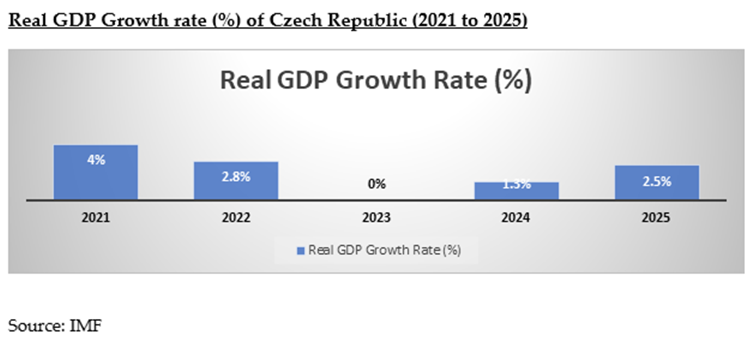
Economically, Czechia has shown a solid recovery from the post-pandemic slowdown and energy crisis. Real GDP growth reached 2.6% in 2025, up from the weak growth recorded during the inflationary period of 2022–24, supported by rising household consumption, improving real wages, and stronger investment. Growth is projected at 1.8% in 2026 before accelerating again to 2.4% in 2027. Inflation has moderated significantly to around 2.3% in 2025, while unemployment remains exceptionally low at 2.8%, among the lowest rates in the European Union.
Globally, the Czech Republic ranks among the world’s advanced high-income economies and is estimated to be around the 45th largest economy by nominal GDP, with a GDP of approximately US $360–370 billion. Its strong industrial base, particularly in automotive, machinery, engineering, and electronics manufacturing, together with deep integration into European supply chains, has helped the country outperform many regional peers in the post-COVID recovery period. Despite challenges from external demand and global trade uncertainties, Czechia continues to offer a stable economic environment, strong export competitiveness, and favorable long-term growth prospects.
India–Czech Republic Trade Relations
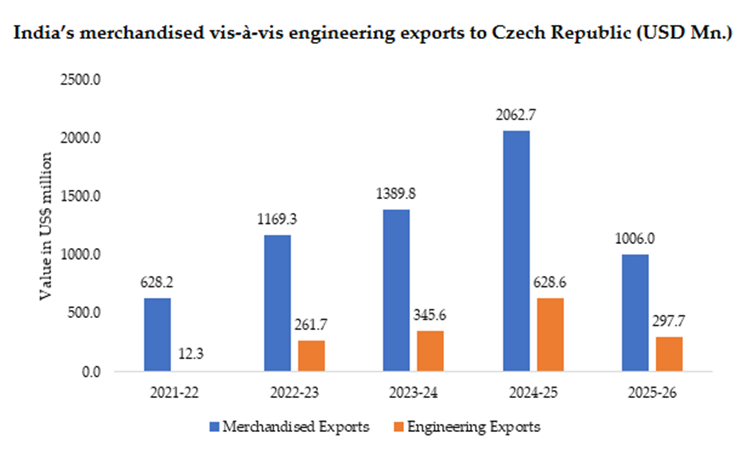
There has been a growing importance of engineering goods in India’s export basket to the Czech Republic over the last five financial years as depicted in the above figures. India’s total merchandise exports to the Czech Republic increased steadily from US$ 628.2 million in 2021-22 to a peak of US$ 2,062.7 million in 2024-25, reflecting strong bilateral trade growth. During the same period, engineering exports expanded even more rapidly, rising from just US$ 12.3 million in 2021-22 to US$ 628.6 million in 2024-25. This sharp increase indicates that engineering products, including machinery, transport equipment, metal products, and industrial components, became a major driver of India’s exports to the Czech market.
However, in 2025-26, both merchandise and engineering exports witnessed a decline, falling to US$ 1,006.0 million and US$ 297.7 million, respectively. Despite this moderation, engineering exports continued to account for a significant share of India’s exports to the Czech Republic, demonstrating the sector’s growing role in strengthening bilateral trade relations and its importance within India’s overall export portfolio to the country.
Opportunity for Engineering Industry in Czech Republic
The Czech Republic presents significant opportunities for the Indian engineering industry owing to its strong manufacturing base, advanced industrial ecosystem, and strategic position within the European Union. The country is a major hub for automotive production, machinery manufacturing, industrial automation, electrical equipment, transport engineering, and metalworking industries, creating sustained demand for engineering products and components.
India’s engineering exports to the Czech Republic have developed a diversified product portfolio, with strong exports of auto components, electrical machinery and equipment, products of iron and steel, industrial machinery, medical instruments, pumps, aluminium products, copper products, and rubber products. As Czech manufacturers seek competitive sourcing partners and supply chain diversification, Indian engineering companies can strengthen their presence by offering high-quality, cost-effective products, technological solutions, precision components, and value-added engineering services.
Engineering products constitute the backbone of India–Czech trade. India’s major exports include:
- Electrical and electronic equipment
- Engineering goods and auto components
- Power equipment and machinery
- Iron and steel products
- Pharmaceutical products
- Organic and inorganic chemicals
- Textiles and leather products
Opportunity for Indian Engineering Sector in Czech Republic
The outlook for bilateral trade remains positive, supported by growing cooperation in advanced engineering, automotive manufacturing, smart mobility, Industry 4.0, artificial intelligence, clean technologies and research collaboration. The recent meetings of the India–Czech Joint Commission for Economic Cooperation and high-level business engagements have further reinforced the commitment of both countries to deepen trade and investment ties.
In this background, it is the right time for India to response to the increasing demand of the engineering industry of Czech Republic and explore the untapped potential while enhancing its share in the Czech’s market through participation in the MSV Brno 2024. Undoubtedly, the event will play a major role for manufacturers and distributors of the Indian engineering sector, opening doors to major growth opportunities in this industry.

EuroBLECH 2026
2 0 – 2 3 O C T O B E R 2 0 2 6 | H a n o v e r , G e r m a n y
EuroBLECH (International Sheet Metal Working Technology Exhibition) is globally regarded as one of the most important international exhibitions dedicated exclusively to the sheet metal working industry. The exhibition serves as a comprehensive business and technology platform for manufacturers, technology providers, automation companies, tooling specialists, and engineering solution providers from across the world. The exhibition is organized biennially in Germany and attracts senior decision-makers, technology buyers, production specialists, and industrial manufacturers seeking advanced solutions in fabrication, automation, digital manufacturing, and smart factory technologies.
Key Features of EuroBLECH 2026
- One of the largest dedicated sheet metal working exhibitions globally
- Highly specialized B2B exhibition
- Highly specialized B2B exhibition
- Strong international participation
- Technology-focused exhibition profile
- Excellent platform for export promotion
- Live machinery demonstrations
- Strong emphasis on automation, AI and sustainable manufacturing
- Direct interaction with global OEMs and technology providers
Highlights of EuroBLECH 2024
Exhibitors 1,317
Exhibiting Countries 39
Trade Visitors 38,946
Visitor Countries 114
Exhibition Area 160,000 sq.m
Why EuroBLECH is Important for Indian Industry
EuroBLECH is widely recognized as one of the world’s most influential business platforms for the sheet metal working and fabrication industry. Participation at the exhibition provides Indian companies with a strategic opportunity to strengthen their international presence, explore advanced manufacturing technologies, and build long-term business partnerships across Europe and other global markets.
For India’s engineering and manufacturing sector, particularly in the context of increasing emphasis on “Make in India”, export diversification, and smart manufacturing, EuroBLECH serves as an ideal gateway to connect with the global metalworking ecosystem.
Indian exhibitors can utilize the platform to showcase their manufacturing strengths, product quality, engineering capabilities, and cost competitiveness before a highly specialized international audience comprising manufacturers, technology providers, OEMs, buyers, distributors, and decision-makers from across the world.
Germany’s economy: A snapshot
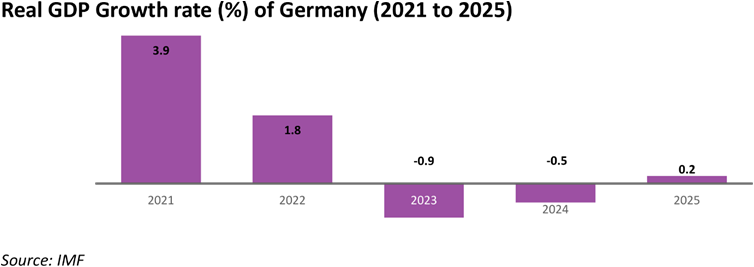
Germany is the largest economy of Europe and fifth largest in pation the world in terms of Purchasing Power parity (PPP). Its highly skilled labour force, continuous advancement in technology and well thought out development planning has made it one of the leading developed economies of the world. Like the rest of the world, Germany also suffered economic losses during the pandemic, revival from which was mired by geo-political tensions across the globe. The country went through two years of contraction and in 2025 too, it is expected to stagnate. However, rebound is expected in 2026 and 2027 driven by increase in public spending, lower inflationary pressure indicating increasing real income and increasing private consumption. As per the World Bank, recovery is expected in corporates’ equipment investment in 2026 which may also imply significant demand in engineering sector.
India and Germany’s Bilateral Trade
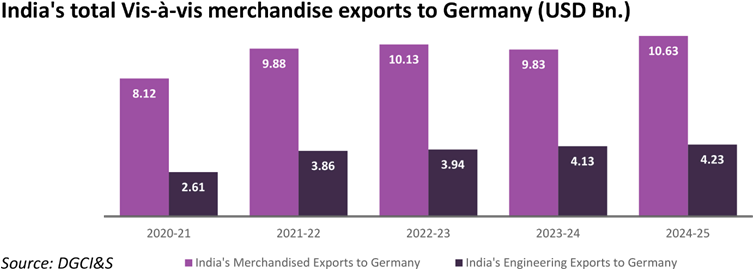
Germany is the fifth largest destination for India’s engineering exports and the largest in European Union. Engineering exports to Germany was recorded at USD 3.24 billion in 2018-19 and then, after declining in the next two fiscals due to the pandemic, it continued its rise in the next fiscals. In FY 2024-25, engineering exports to Germany increased by 2.4% while India’s overall merchandised exports to Germany increased by 8%. Major engineering panels exported from Germany to India include electrical machinery, products of iron and steel, auto components and parts, industrial machinery, medical and scientific instruments, auto tyres and tubes, IC engines, Injecting and moulding machinery etc.
Opportunity for Indian Engineering Industry in Germany
EuroBLECH is particularly important at a time when global industries are increasingly seeking reliable and diversified supply chain partners. Indian engineering companies, with their growing manufacturing capabilities and competitive advantages, are well positioned to benefit from such international business platforms. Participation at EuroBLECH can therefore help Indian industry enhance global visibility, strengthen export competitiveness, adopt modern manufacturing technologies, and integrate more effectively into international production and supply networks.
Korea Metal Week 2026
2 8 – 3 0 O c t o b e r 2 0 2 6 | K I N T E X , S o u t h K o r e a
Korea Metal Week (KMW) is one of South Korea’s leading industrial manufacturing exhibitions covering the entire metal-processing and engineering value chain. The event serves as a major platform for manufacturers, buyers, distributors, technology providers, and industry professionals from Asia and across the world. It is particularly relevant for Indian engineering exporters seeking opportunities in automotive components, industrial machinery, metal processing, fasteners, foundry products, forging, welding, and advanced manufacturing technologies.
The 2025 edition of KMW attracted around 450 exhibitors from 28 countries and regions and showcased cutting-edge technologies in fasteners, foundry, forging, automotive components, welding, automation and smart manufacturing. The forthcoming 2026 edition of KMW offers an excellent opportunity for Indian engineering exporters to explore business partnerships and strengthen their presence in the South Korean and East Asian markets.
India–Korea Trade Relations: A Snapshot
India and the Republic of Korea enjoy a robust and evolving economic partnership under the India–Korea CEPA. Bilateral trade has reached nearly US$ 27 billion, with engineering products constituting a significant share of India’s exports. Recent initiatives to upgrade the CEPA and strengthen cooperation in semiconductors, EVs, shipbuilding, clean energy, digital technologies and advanced manufacturing are expected to further enhance trade and investment flows. South Korea continues to offer substantial opportunities for Indian engineering exporters seeking access to one of Asia’s most technologically advanced manufacturing markets.
India-Korea Bilateral Trade
The bilateral trade between India and Korea was US$ 26.89 billion during FY25.
The Republic of Korea is India’s 13th largest FDI investor from April 2000-March 2025, standing at US$ 6.69 billion. Metallurgy, automobile, electronics, prime movers, machine tools, hospitals, and diagnostic centres are the top sectors which have attracted investment.
As India’s economic ties continue to grow with South Korea, the bilateral trade is likely to reach US$ 50 billion by 2030.
Opportunity for Indian Engineering Sector in South Korea
For Indian engineering exporters, South Korea represents an important market offering opportunities in automotive components, industrial machinery, castings, forgings, metal products, renewable energy equipment, and advanced manufacturing technologies. Korea’s strong industrial base and increasing interest in diversifying supply chains continue to create new avenues for bilateral business collaboration.
The emerging strategic alignment between India and Korea is creating a new convergence of capabilities and closer synergy in new areas of economic cooperation such as public health, green growth, digital connectivity, and trade, among others. In this background, it is an apt time for India to response to the demand of the industrial goods and machinery industry of South Korea and enhance its share in the South Korean market through participation in the Korea Metal Week 2026.
INDUSMACH Africa 2026
1 8 – 2 0 N O V E M B E R 2 0 2 6 | D a r e s S a l a a m , Ta n z a n i a
About the Show
INDUSMACH AFRICA - International Trade Exhibition on Industrial Products, Equipment & Machinery is the largest trade event for the tools, hardware and manufacturing sector held annually in Tanzania. The exhibition attracts visitors from all over East & Central Africa, thus giving exhibitors an excellent opportunity to explore several countries at one time. The 26th edition of INDUSMACH AFRI-CA @Tanzania is expected to be even bigger and better not only in terms of exhibitors but also visitors from other African countries. Around 100 exhibitors from 20+ countries spread out over 5,000 Sqm. of exhibition space, will take part at the mega event.
Over the past few years, Tanzania has emerged as a major regional trade centre. According to the World Bank, Tanzania’s imports of goods and services amounted to $10.9 billion, of which $2.5 billion (23%) were imports of capital goods that are used to produce other goods or services, such as machinery, equipment, vehicles, etc. The manufacturing sector in Tanzania is one of the key pillars of the country’s economic development, contributing about 8% of the gross domestic product (GDP) and employing about 700,000 people. The manufacturing sector in Tanzania is mainly composed of food processing (24%), textiles and clothing (10%), chemicals (8.5%), and others, including beverages, leather and leather products, paper and paper products, publishing and printing, and plastics.
INDUSMACH is positioned as an international platform for industrial products, equipment, machinery, tools, engineering and manufacturing technologies. The exhibition is particularly relevant for Indian engineering exporters because it provides an opportunity to meet local buyers as well as distributors and business visitors from neighbouring African markets, rather than restricting the opportunity to Tanzania alone.
Concurrent Event
TOOLS & HARDWARE AFRICA 2026 - Tanzania’s mega industrial exhibition on Tools, Hardware, Materials & Machinery and related services.
25th INDUSMACH Africa 2025 Highlights
3,500 Total Trade Visitors
93% of visitors came from Africa, with 82% specifically from East Africa
20+ Exhibiting Countries
80+ Total Exhibitors
3,000 Total Exhibitors
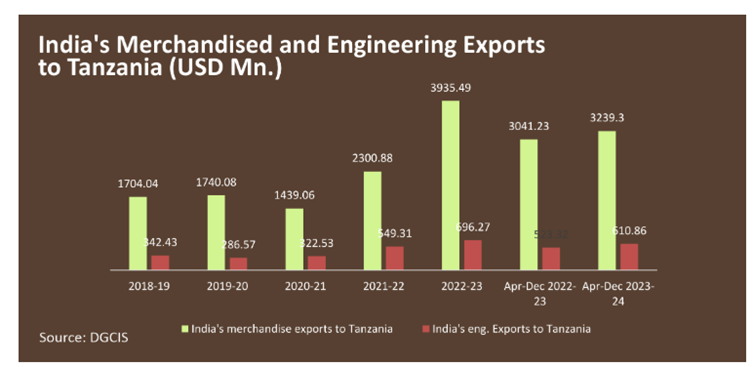
India and Tanzania have a strong diplomatic and commercial relationship. India is among the top 5 suppliers to Tanzania in goods. Within engineering, India is the second largest supplier to Nigeria following China with a share of 10% in Tanzania’s engineering import basket. Major products exported from India to Tanzania include automobiles and auto-parts, electrical machinery, industrial machineries, etc.
INDUSMACH Tanzania mainly focuses on industrial equipment and machineries and it is largest such event in Tanzania attracting buyers from all over East and Central Africa. India has significant potential in this sector.
Opportunity for Industrial Machinery in Tanzania
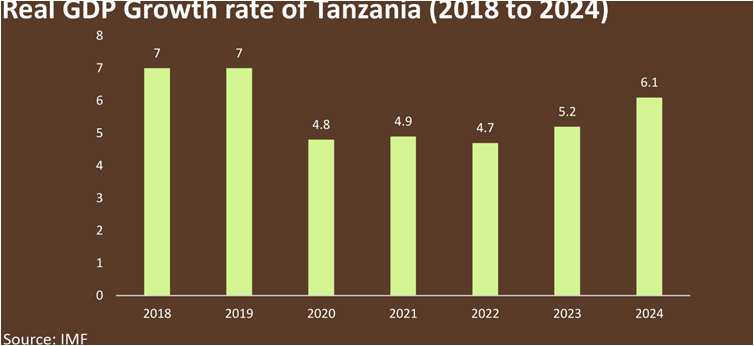
The manufacturing sector in Tanzania is an important contributor to the country’s economic journey. As per data from the government, it registered an annual growth rate of 8.3% and its contribution to GDP remained at 8.1%. It also employs significant number of people and is an important foreign exchange earner.
Food processing, textiles, chemical and plastic manufacturing are some of the major manufacturing sectors in the country. Hence there is a huge requirement of capital goods pertaining to these sectors as Tanzania has imort dependency in capital goods. The recent development agenda of the country has brought industrial development at the forefront of the country’s economic policies. Therefore, it is expected that the demand for machineries will remain steady in Tanzania for the coming years.
In this background, INDUSMACH offers Indian exporters in the industrial machinery ector a podium to exhibit their expertise and take advantage of Tanzania’s growth story.

© Copyright , All rights reserved. Design by Andreal